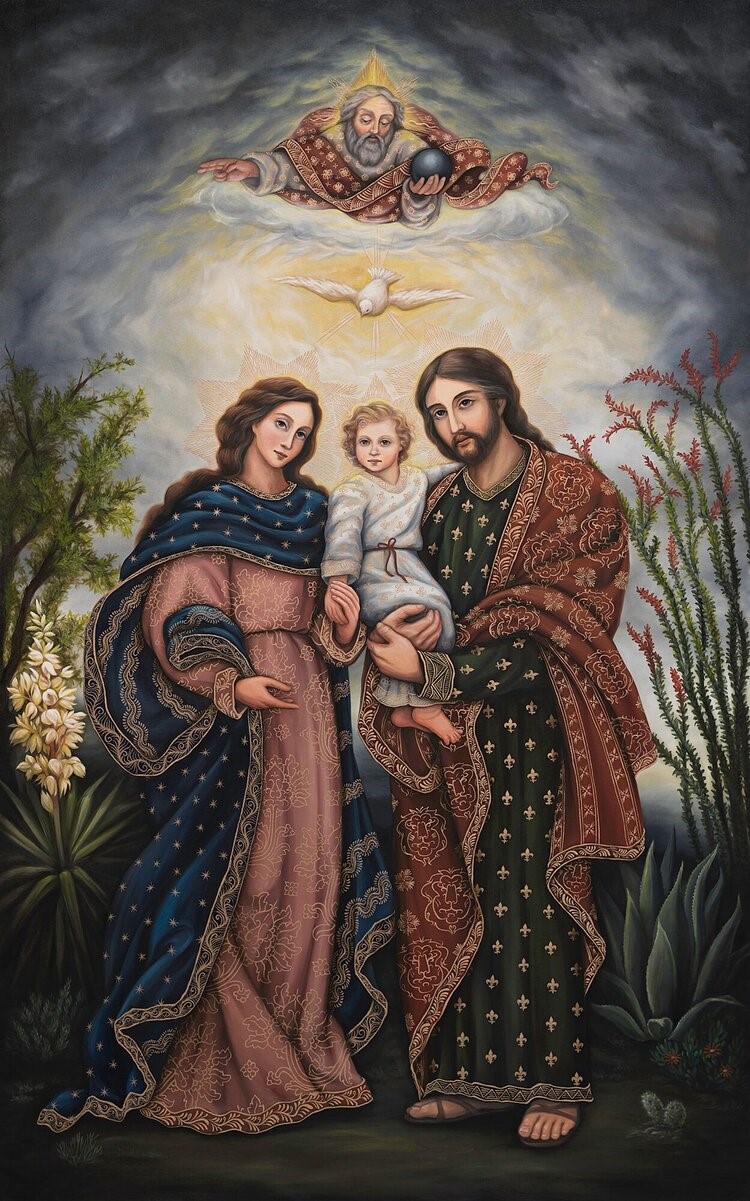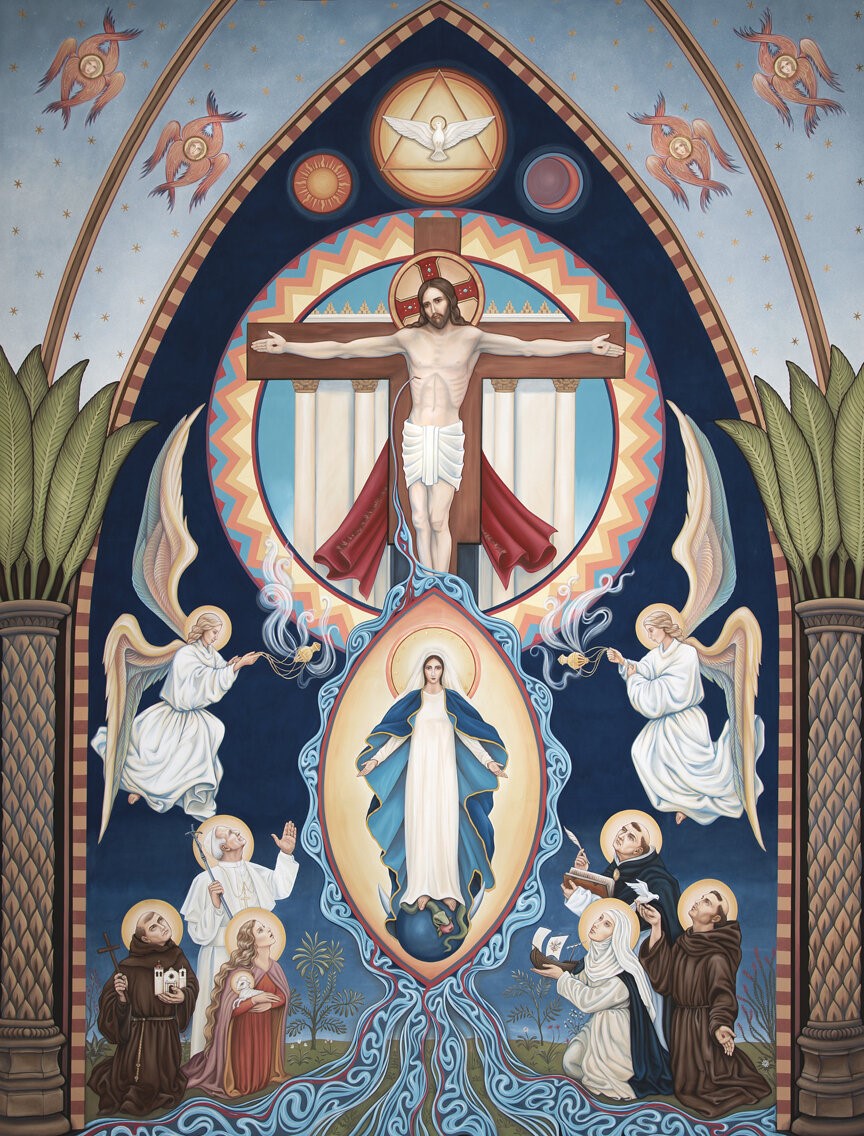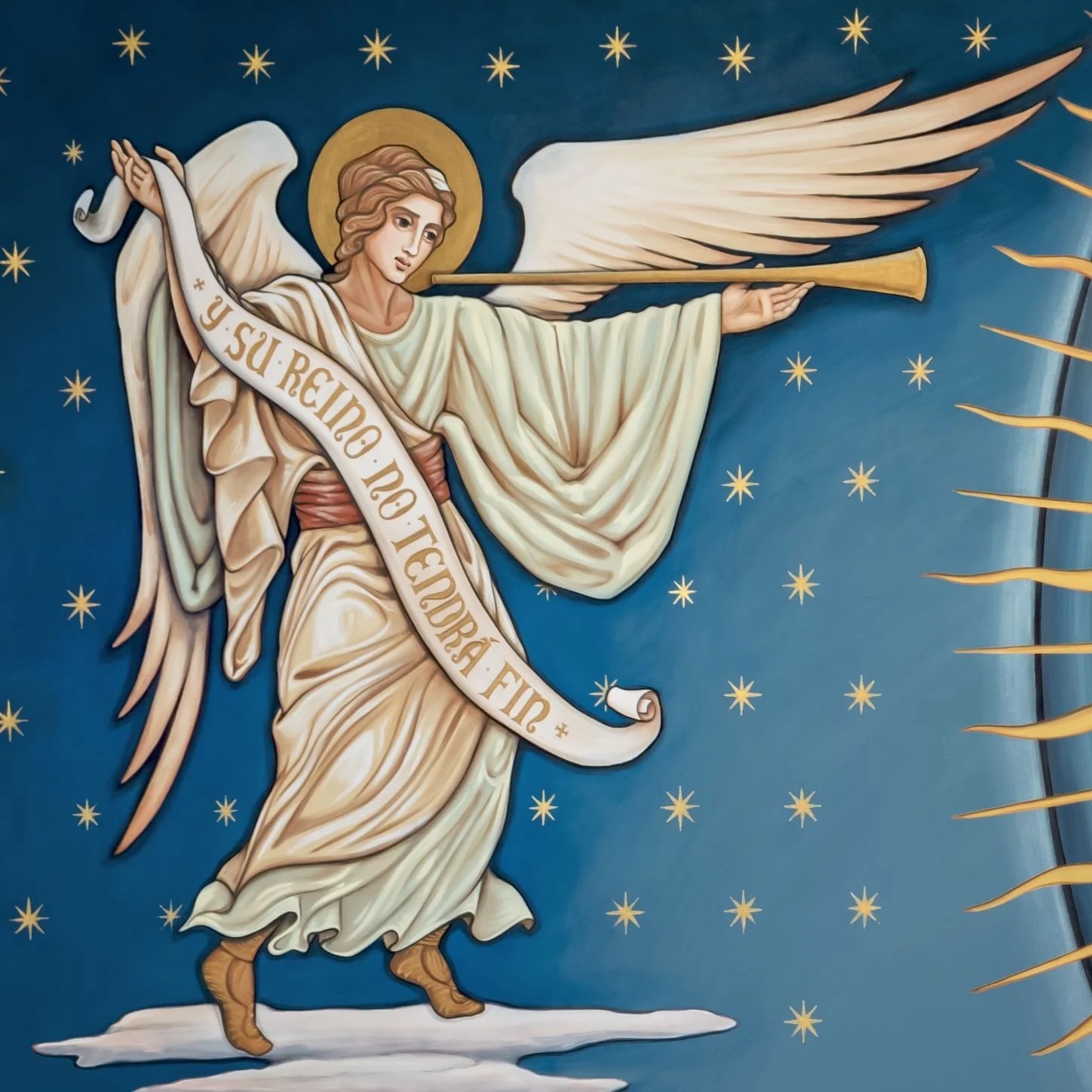



It was both an honor and a challenge to select the artworks that now adorn the walls of Villa Richardson. We sought to assemble pieces that celebrate a number of intersecting ideas—the story of America, our personal ties to the Southwest and Midwest, and our values of faith and family—while remaining in harmony with the Eternal City and its profound backdrop of beauty and history.
My wife Sara and I call Chicago home, though I was born and raised in Arizona. In selecting these works, we sought to feature the mission-style architecture of the American Southwest and the spirit of the Wild West, while also acknowledging family and small-town communities as the building blocks of society, as well as the underlying spiritual faith that connects us to the Catholic Church and the Holy See. Together, we chose pieces that reflect the pioneering character of the United States—shaped by exploration, creativity, and resilience—and resonate with the hopeful and eternal spirit of Rome, long regarded as a cradle of Western civilization.
We are deeply grateful to the artists who shared their art with us. We also thank the generous lenders who made this exchange possible, and the dedicated team at Art in Embassies for stewarding this remarkable program around the world.
Ambassador Brian Francis Burch II and Susan Burch
Vatican City, Rome, Italy
Bill Anton grew up in Chicago but developed an early fascination with the American West. In 1982, he began participating in cattle roundups on ranches near Flagstaff and Prescott, Arizona, while simultaneously pursuing painting full time. His landscapes often include the cowboy, a figure tied to the mythology of the American West and to broader ideas about American life. Anton describes his work as an attempt to convey mood and emotion: “If I’m recording anything, I’m recording how I feel about the West.”
Painter and watercolorist Gifford Beal gained national recognition in the early twentieth century for his gentle, warmly lit depictions of American landscapes and urban views. Born into a prominent New York family, Beal began his artistic training as a teenager with summer courses led American impressionist William Merritt Chase. Under Chase’s tutelage, Beal mastered the impressionist technique of documenting the transient effects of light and atmosphere, an approach that continued to shape his work as style and subject matter evolved from austere seascapes featuring monumental figures to dynamic views of New York’s freight yards. Friend and fellow painter Barry Faulkner said Beal’s work showed “the eternal pleasures of work and leisure, the casual enjoyable incidents which add so much to life’s richness.”
His work attracted early attention, and by age twenty-two he was exhibiting nationally. Beal’s work can be found in some of the nation’s most esteemed collections, including the Metropolitan Museum of Art, New York; the Art Institute of Chicago; and the Nelson-Atkins Museum of Art, Kansas City, Missouri.
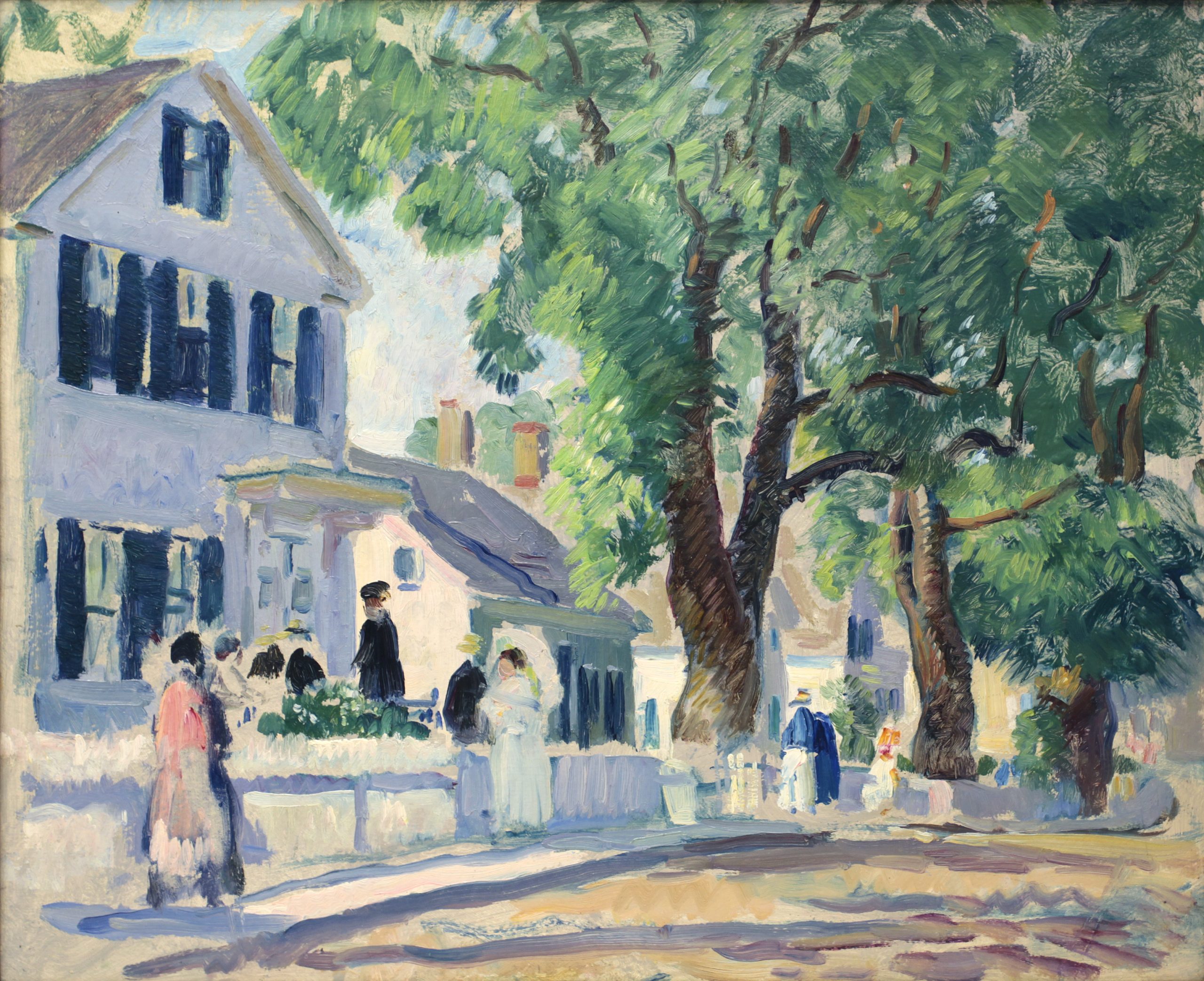
Born in St. Joseph, Missouri, and raised in southwestern Colorado, where he learned to draw and ride horses, Fred Harman Jr. was an American artist, illustrator, and cartoonist best known as the creator of the popular western comic strip Red Ryder, which ran from 1938 to 1964. Drawing inspiration from the landscapes, history, and folklore of the American West, Harman’s paintings and murals extended the storytelling found in his comics, blending regional pride with popular culture and helping shape his enduring artistic identity.
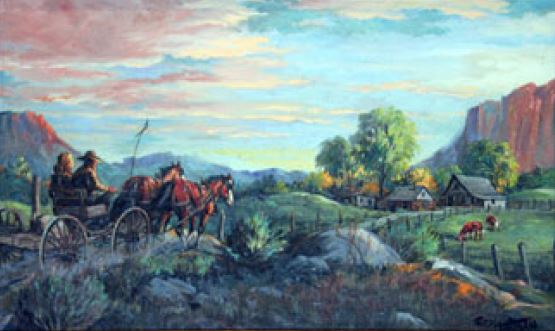
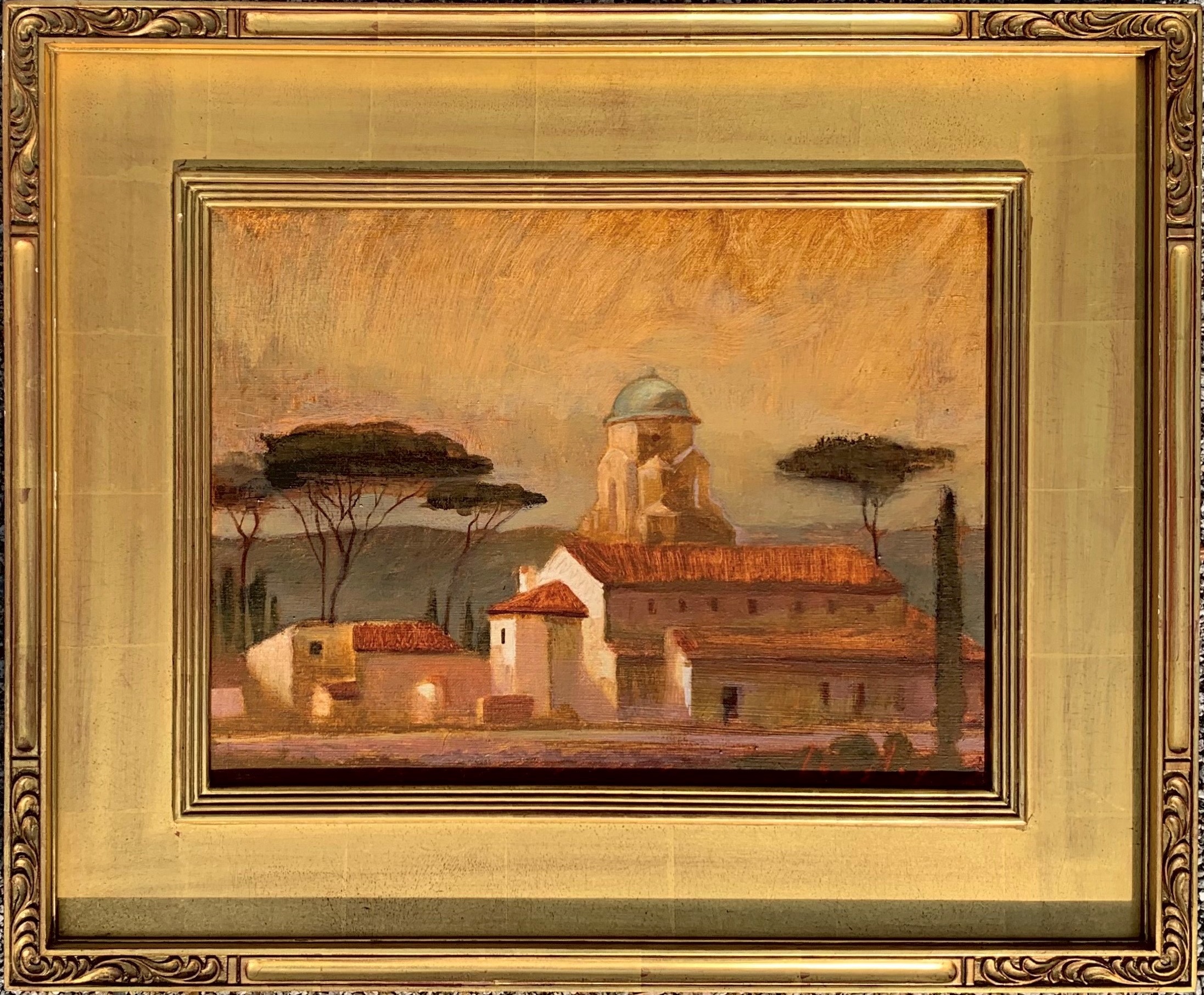
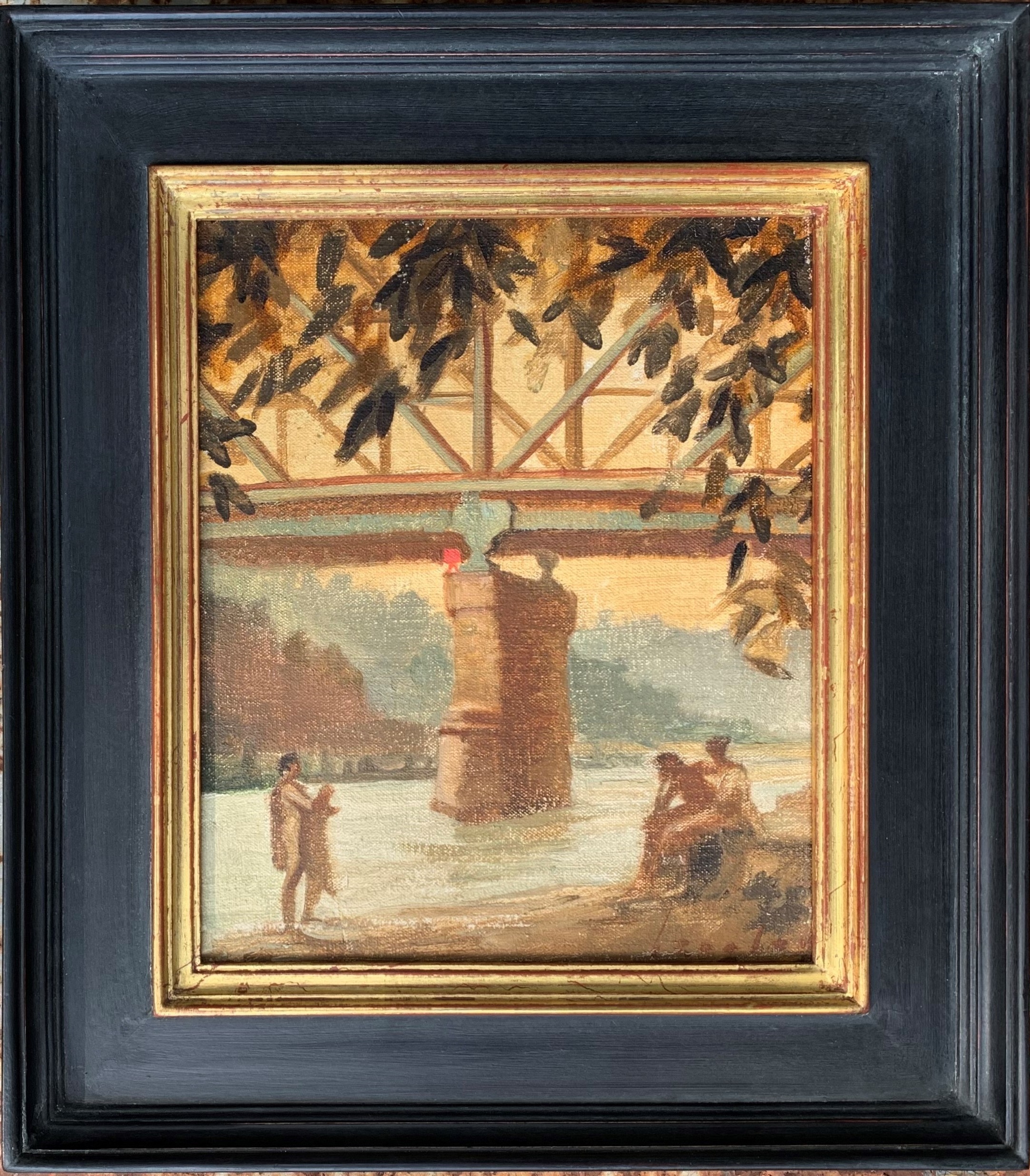
James Langley is a figurative painter working in oil, watercolor, and mixed media. Bathers along the Ohio at Sewickley Crossing depicts figures beneath Sewickley Bridge, a steel truss bridge built in 1911. Using a palette knife and hog-hair bristle brushes, Langley emphasizes mood over surface detail. Spanish Revival Church at Dusk, Ojai, California was inspired by a visit to Thomas Aquinas College, Santa Paula, California, not far from where the church was depicted in the painting. Langley recalls the experience: “The dry heat in the hazy evening with the perfume of sage, eucalyptus, and pine filling the air evoked the memory of many long hikes alone with my books in these foothills of the Los Padres National Forest… I saw this church laid out like a city under the sheltering pines with its copper dome pushing upward and gleaming against the golden sky.”
For more than thirty years, Ruth Stricklin has had a varied career in the arts, working as an interior decorator, muralist, and theater set designer before devoting her practice to sacred subjects. In 2014, she and her husband, Geoffrey, founded New Jerusalem Studios in Phoenix, Arizona, in response to renewed interest in traditional Catholic liturgical art. Drawing on iconography and the traditions of West and East, Stricklin’s work explores themes rooted in Biblical tradition.