


Art in Embassies reflects the spirit of the United States through the creativity of its people. At the Ambassador’s Residence—the home of the American people in Mexico—this exhibition offers a view into the rich layers of American culture as it is lived and shared. For my wife, Alina, and me, it is also a way to welcome fellow Americans, our friends, and partners in Mexico, and to extend the kind of hospitality we value.
Through a range of techniques and materials, these works celebrate the ingenuity that shapes America. From layered textures and abstract compositions to vivid explorations of light, color, and landscape, the artists draw from their home states—from Florida and Arizona to Alabama and beyond—expressing both a sense of place and a broader American experience. As we mark 250 years of American independence through Freedom 250, this exhibition reflects a nation built on freedom, faith, and democratic ideals—and a tradition of invention that has been a part of our story since the beginning.
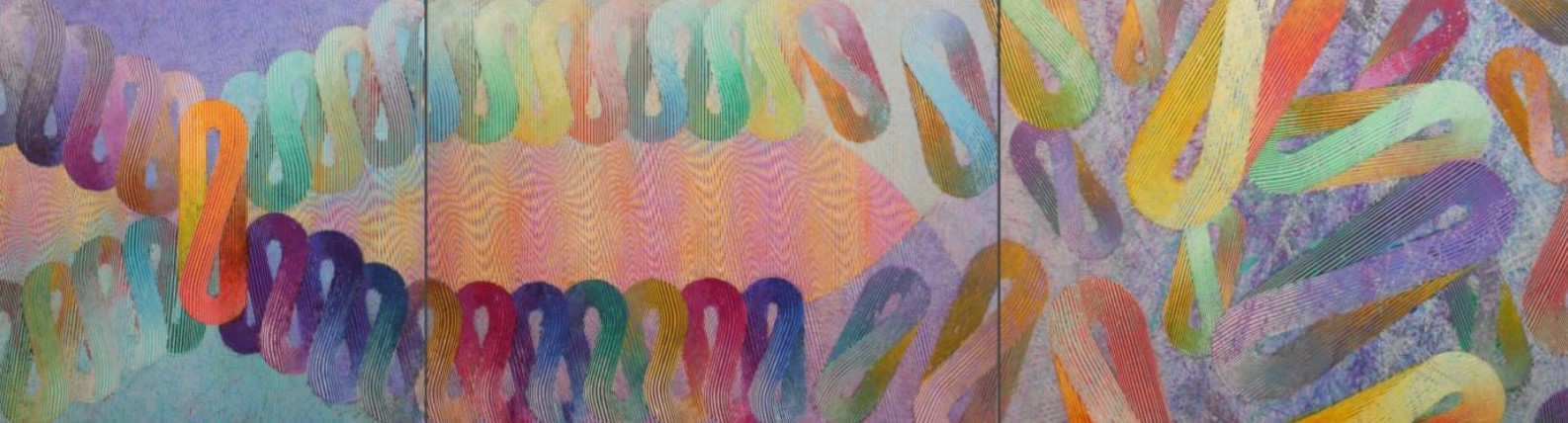
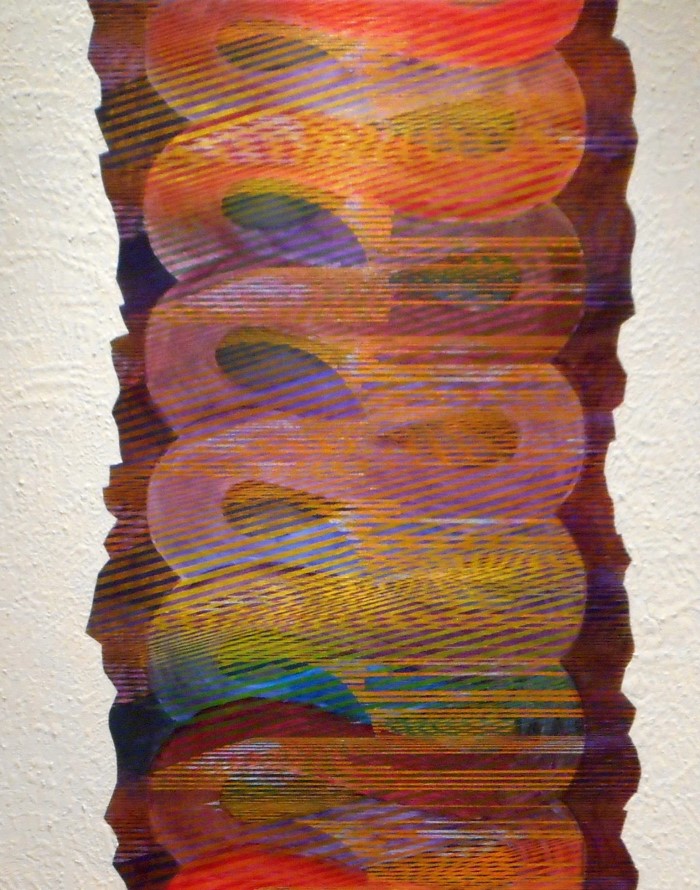
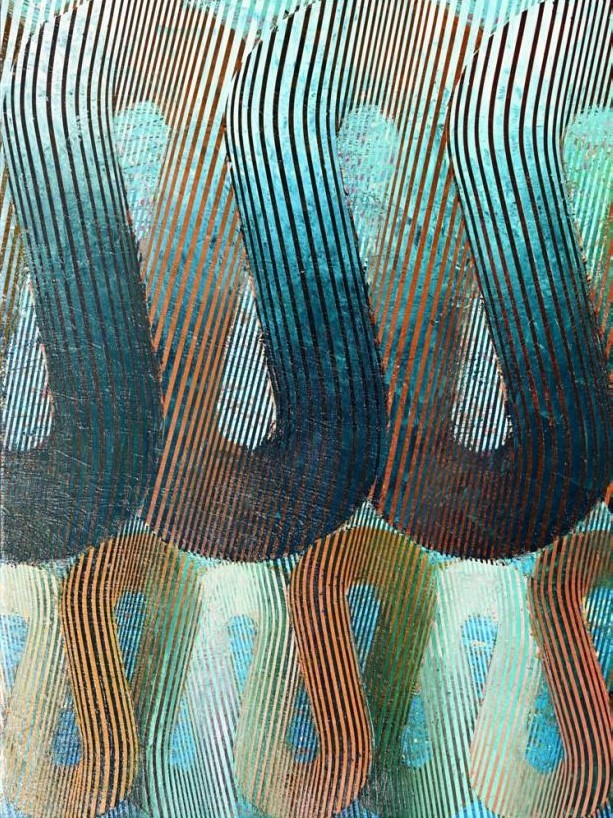
Fascinated by the complex patterns of human life and nature, Nathan Beard sources his work from music and scientific methodologies like chaos theory, fractal geometry, quantum physics, and cosmology. His practice includes painting, as well as collage, printmaking, rug design, and conceptual projects that examine musical patterns and the Japanese technique of kintsugi. His Exit Music series reflects this investigation into such patterns and processes. By placing strips of blue painter’s tape on the canvas or panel, Beard creates cyclidic patterns that augment the dimension and movement of “roughly-hewn serpentine forms floating in an expressionistic soup.” Composed of shifting color fields with varying degrees of hue and temperature, these richly layered paintings explore the interaction between order and chance—what Beard has described as “the weaving of human will with natural forces as a creative activity that sculpts reality to our ever-changing needs and desires.”
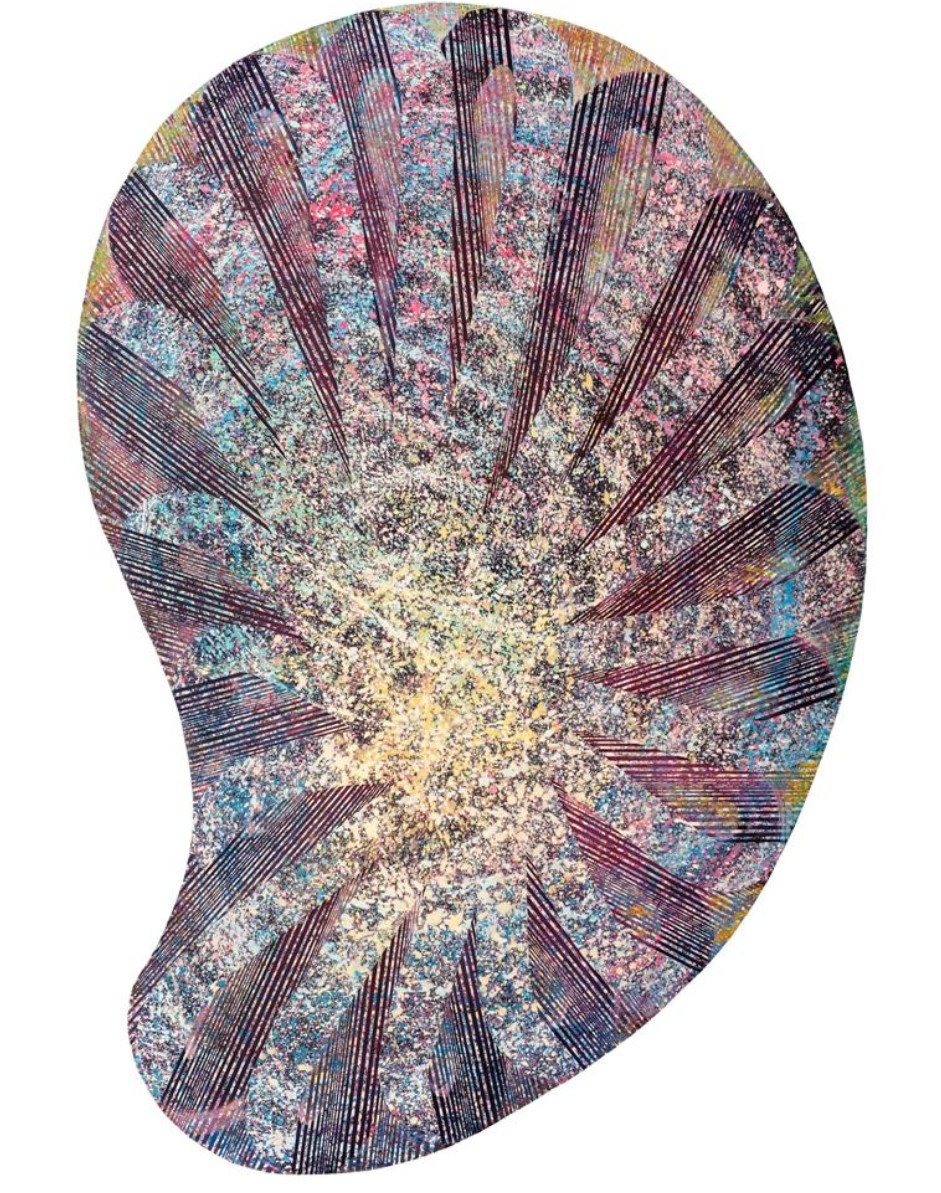
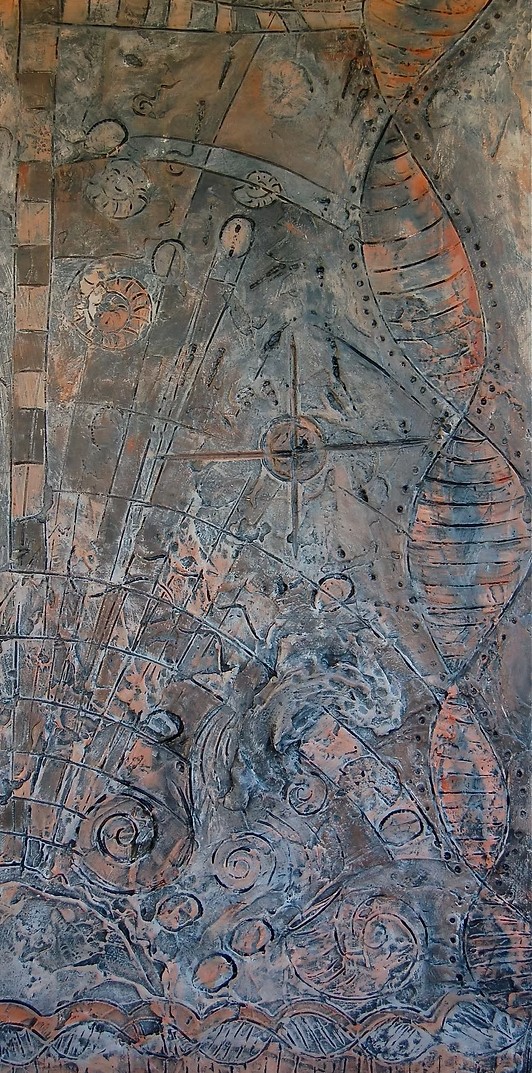
Raised along the banks of the Coosa River in Alabama, P. Hope Brannon grew up wading in the creek during the summer seasons, observing rocks, leaves, moss, and small animals. Internal Compass is from her Fossils of Time series, which recontextualizes the idea of place, land, artifacts, and human history. Described as “an evolutionary process and an experimental exploration of contemporary drawing through painting, color, and line,” the series draws on historical research and fossilized life forms, connecting them to contemporary culture and innovations. Composed of plaster, spackling compound, graphite, and layered paints and waxes, the surface of this abstract bas-relief recalls ancient petroglyphs and pictographs.
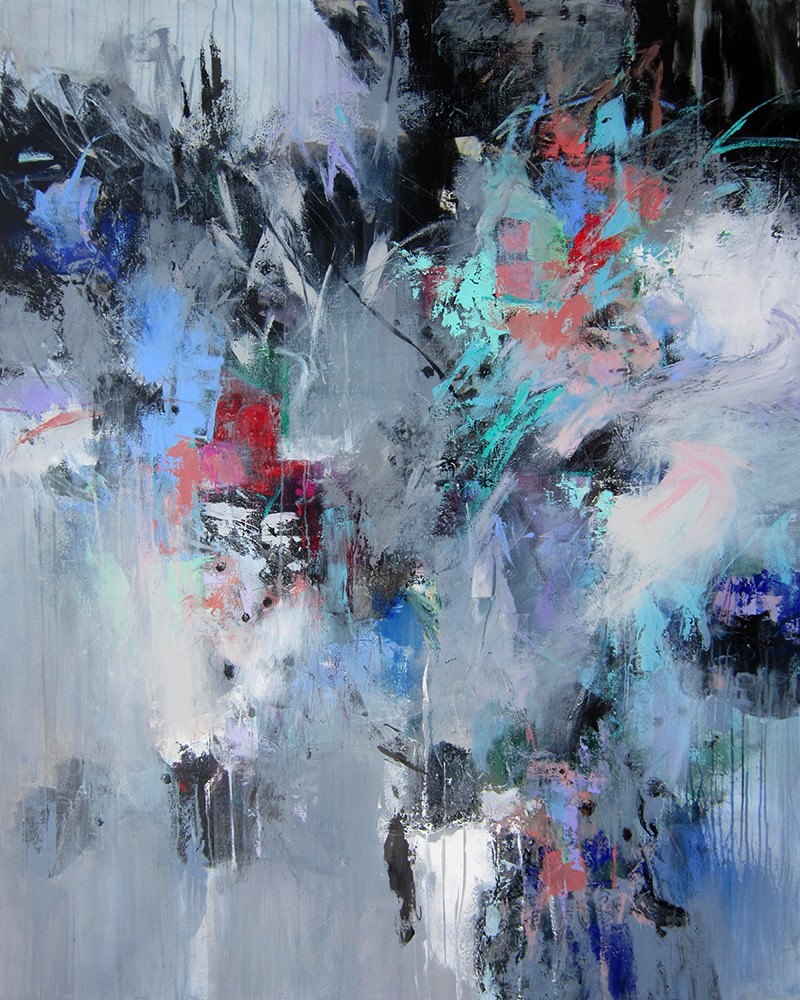
Kristin Herzog’s acrylic paintings move between non-representational imagery and abstraction, often drawing on the rhythms of landscape and vegetation, as seen in Garden Palooza I and Early Rain I. Of Garden Palooza I, Herzog states: “living in Florida, I’m surrounded by all kinds of interesting vegetation which all grows very fast. This painting is a celebration of nature’s amazing creative powers.” Of Early Rain I, she has described “a grey, drizzly morning, mixing some fog in with the early light… a peaceful, quiet time as the rain mutes other sounds.”

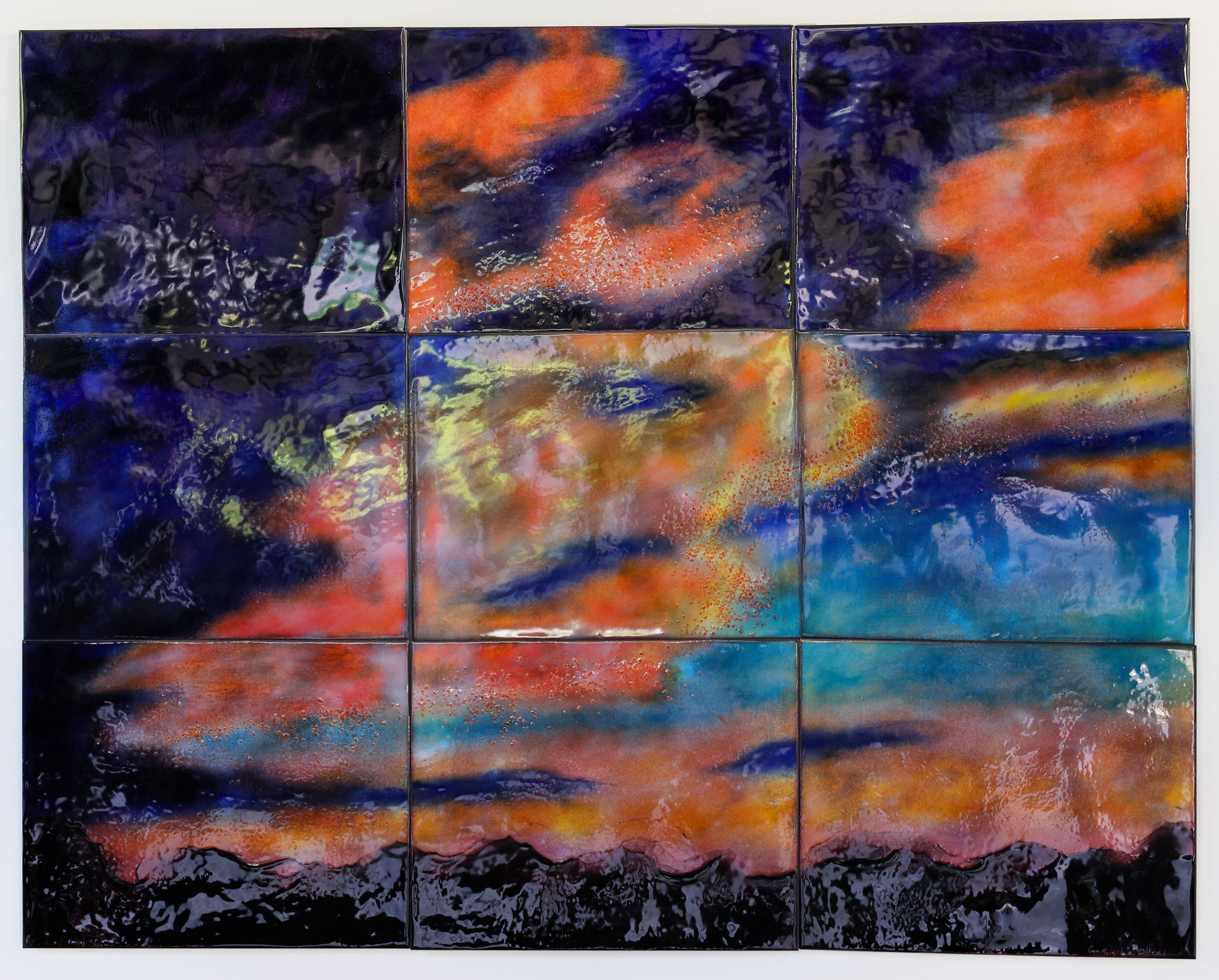
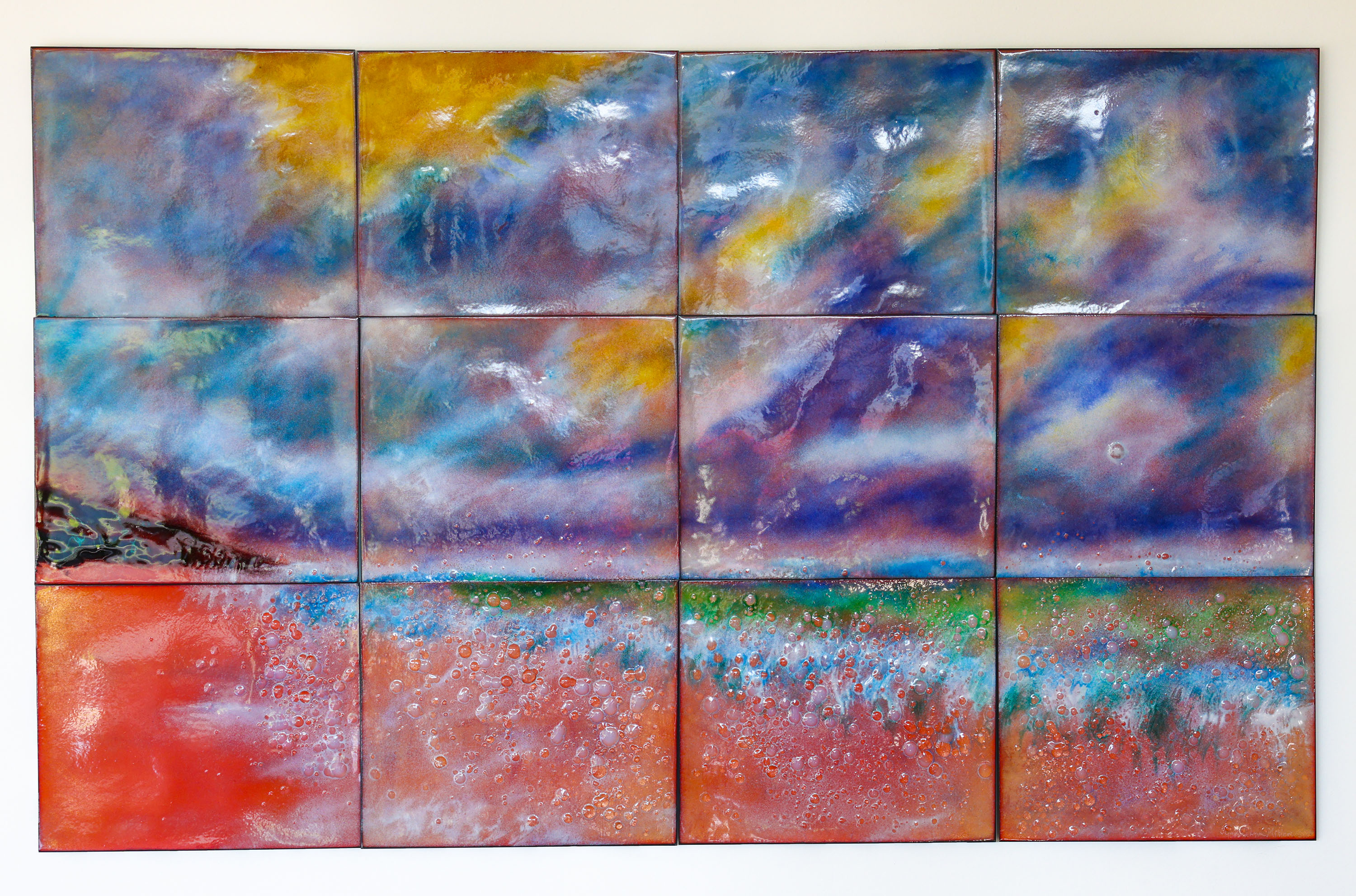
Cynthia Miller’s intricate glass works explore the colors, seasons, and shifting effects of light in the natural world, from foliage to celestial nebula. To create her luminous panels, Miller first designs the overall composition and then fires each single panel and scours solid copper panels until they gleam. As the glass melts to 1,200-1,500 degrees, she sifts pulverized glass onto the copper. Vibrant and subtle hues are revealed, and enamel jewels are added while the panel cools. About ten layers of color and multiple firings achieve the desired effect in each panel. “I have always been fascinated with brilliant, jewel-like color. Vitreous enamel glass—kiln fused onto copper panels—captures and celebrates light and color like no other medium I know. I delight in exploring the scintillating array of hues and luminosity: each shift in light reveals another variation.”
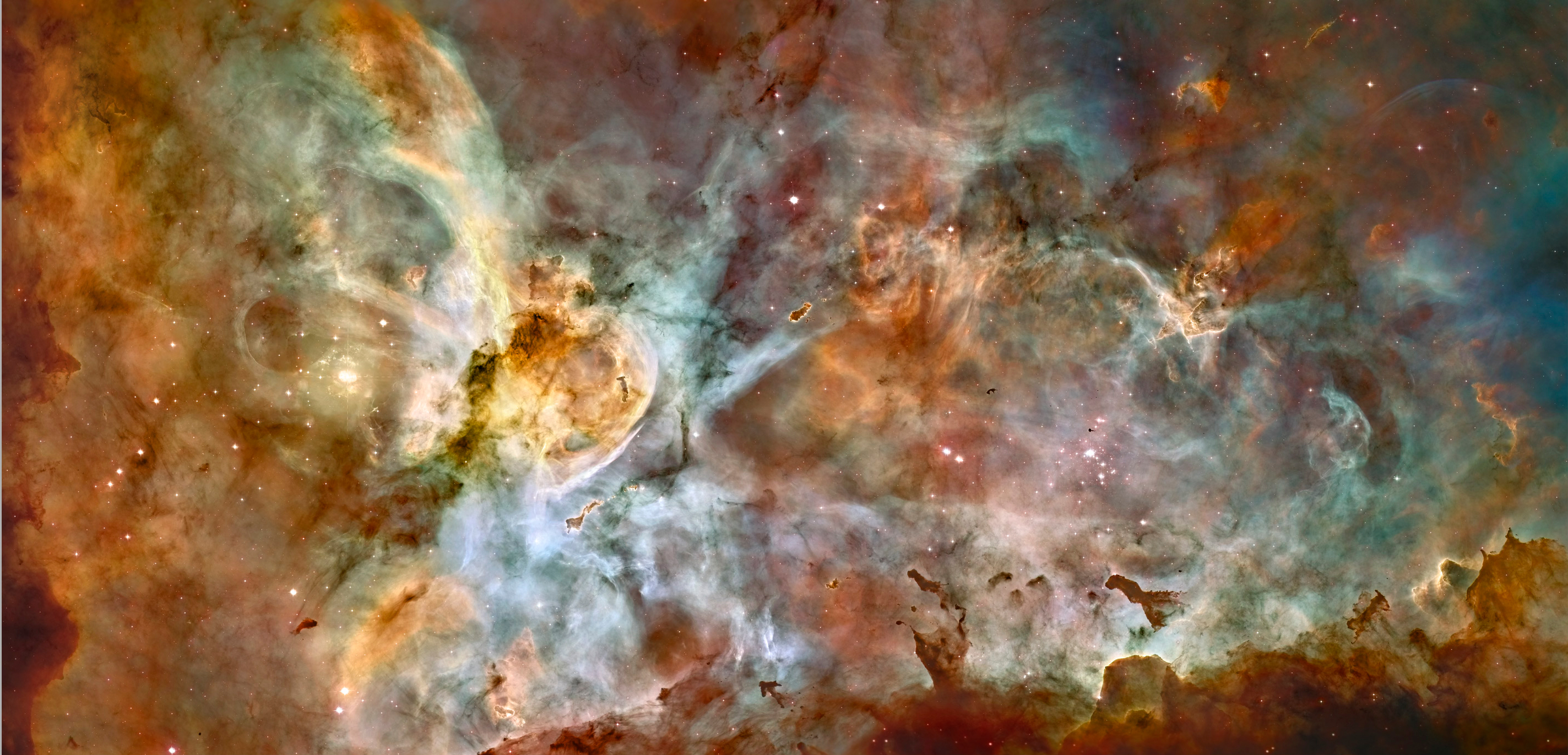
Named in honor of early twentieth-century astronomer Edwin Hubble, the Hubble Telescope launched in 1990 to aid NASA in expanding our understanding of the most distant stars and galaxies, as well as of the planets in our solar system. Above the distortion of the atmosphere, above rain clouds and light pollution, Hubble has an unobstructed view of the universe.
April 24, 2007: In celebration of the 17th anniversary of the launch and deployment of NASA’s Hubble Space Telescope, a team of astronomers is releasing one of the largest panoramic images ever taken with Hubble’s cameras. It is a 50-light-year-wide view of the central region of the Carina Nebula where a maelstrom of star birth — and death — is taking place. This image is a mosaic of the Carina Nebula assembled from 48 frames taken with Hubble’s Advanced Camera for Surveys. The Hubble images were taken in the light of neutral hydrogen during March and July 2005. Color information was added with data taken in December 2001 and March 2003 at the Cerro Tololo Inter-American Observatory in Chile. Red corresponds to sulfur, green to hydrogen, and blue to oxygen emission.
NASA Hubble Telescope, The Carina Nebula: Star Birth in the Extreme, Hubble image, Overall: 118 x 59in. (299.7 x 149.9cm), Courtesy of HubbleSite and Art in Embassies
April 25, 2005: During the 15 years NASA’s Hubble Space Telescope has orbited the Earth, it has taken more than 700,000 photos of the cosmos; images that have awed, astounded and even confounded astronomers and the public. NASA released new views today of two of the most well-known objects Hubble has ever observed: the Whirlpool Galaxy (spiral galaxy M51) [left] and the Eagle Nebula [right]. These new images are among the largest and sharpest Hubble has ever taken. They were made with Hubble’s newest camera, the Advanced Camera for Surveys (ACS). The images are so incredibly sharp, they could be enlarged to billboard size and still retain stunning details.
For the 15th anniversary, scientists used the ACS to record a new region of the eerie-looking Eagle Nebula. The Eagle Nebula image reveals a tall, dense tower of gas being sculpted by ultraviolet light from a group of massive, hot stars. The new Whirlpool Galaxy image showcases the spiral galaxy’s classic features, from its curving arms, where newborn stars reside, to its yellowish central core that serves as home for older stars. A feature of considerable interest is the companion galaxy located at the end of one of the spiral arms.
NASA Hubble Telescope, Out of This Whirl: the Whirlpool Galaxy (M51) and Companion Galaxy, Photo print, Overall: 50 x 70in. (127 x 177.8cm), Courtesy of HubbleSite and Art in Embassies

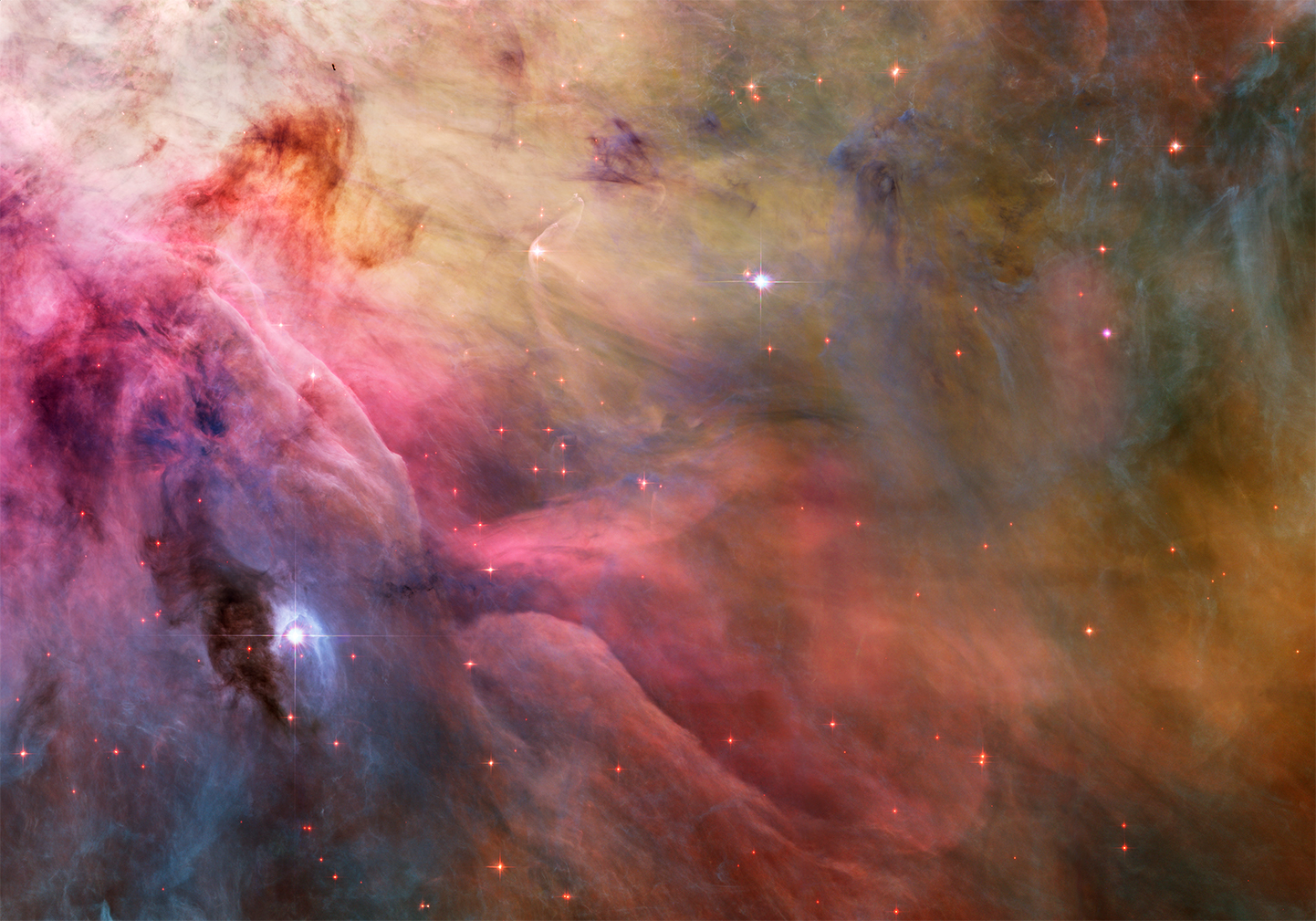
January 11, 2006: In one of the most detailed astronomical images ever produced, NASA’s Hubble Space Telescope captured an unprecedented look at the Orion Nebula. This turbulent star formation region is one of astronomy’s most dramatic and photogenic celestial objects. More than 3,000 stars of various sizes appear in this image. Some of them have never been seen in visible light. These stars reside in a dramatic dust-and-gas landscape of plateaus, mountains, and valleys that are reminiscent of the Grand Canyon. The Orion Nebula is a picture book of star formation, from the massive, young stars that are shaping the nebula to the pillars of dense gas that may be the homes of budding stars.
NASA Hubble Telescope, Abstract Art Found in the Orion Nebula, Hubble image, Overall: 55 x 78in. (139.7 x 198.1cm), Courtesy of HubbleSite and Art in Embassies
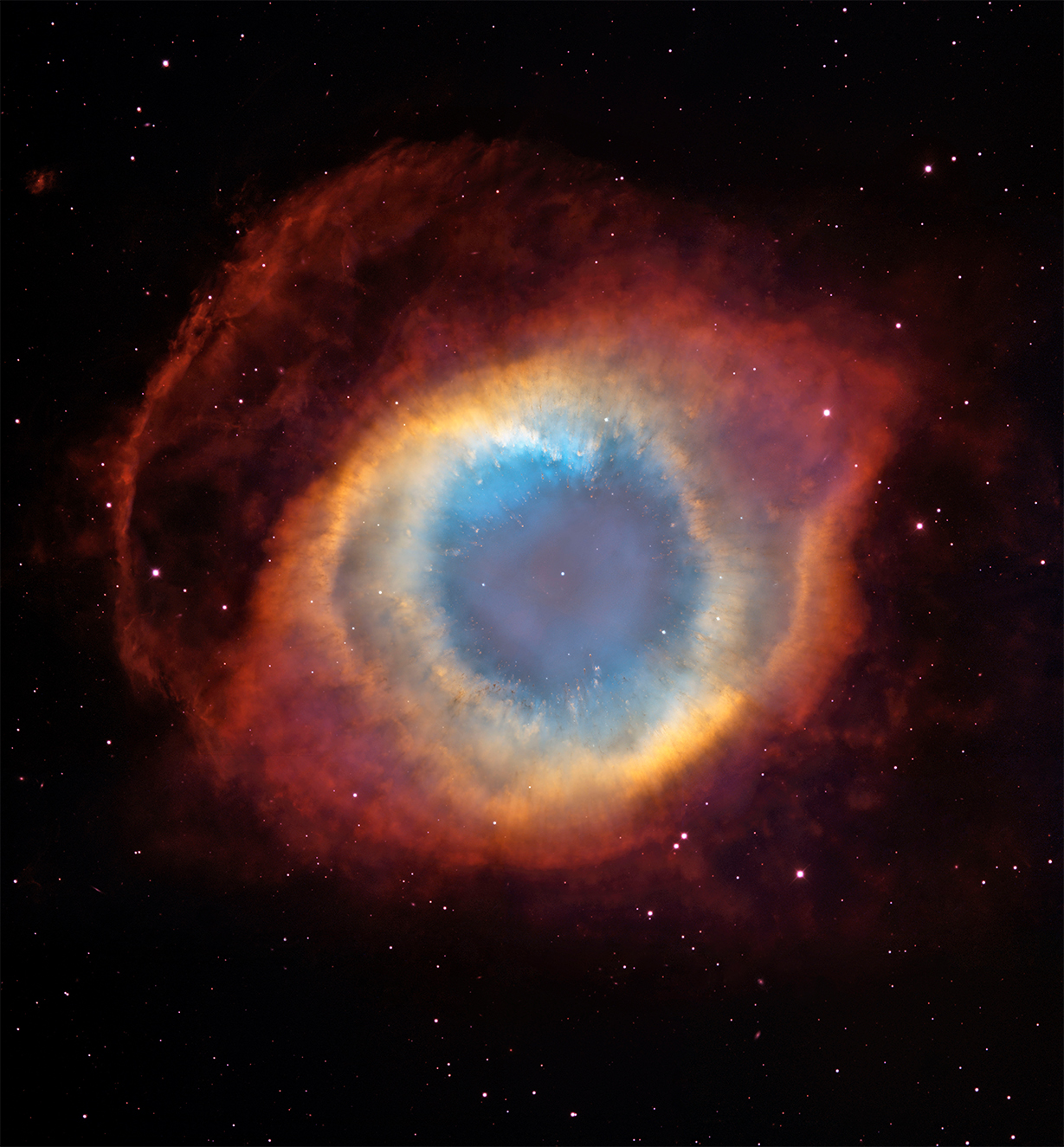
This detailed picture of the Helix Nebula shows a fine web of filaments, like the spokes of a bicycle, embedded in the colorful red and blue gas ring around this dying star. The Helix Nebula is one of the nearest planetary nebulae to Earth, only 650 light years away.
The Helix Nebula: a Gaseous Envelope Expelled By a Dying Star, Hubble image, 40 × 40 in. (101,6 × 101,6 cm), Courtesy of HubbleSite and Art in Embassies
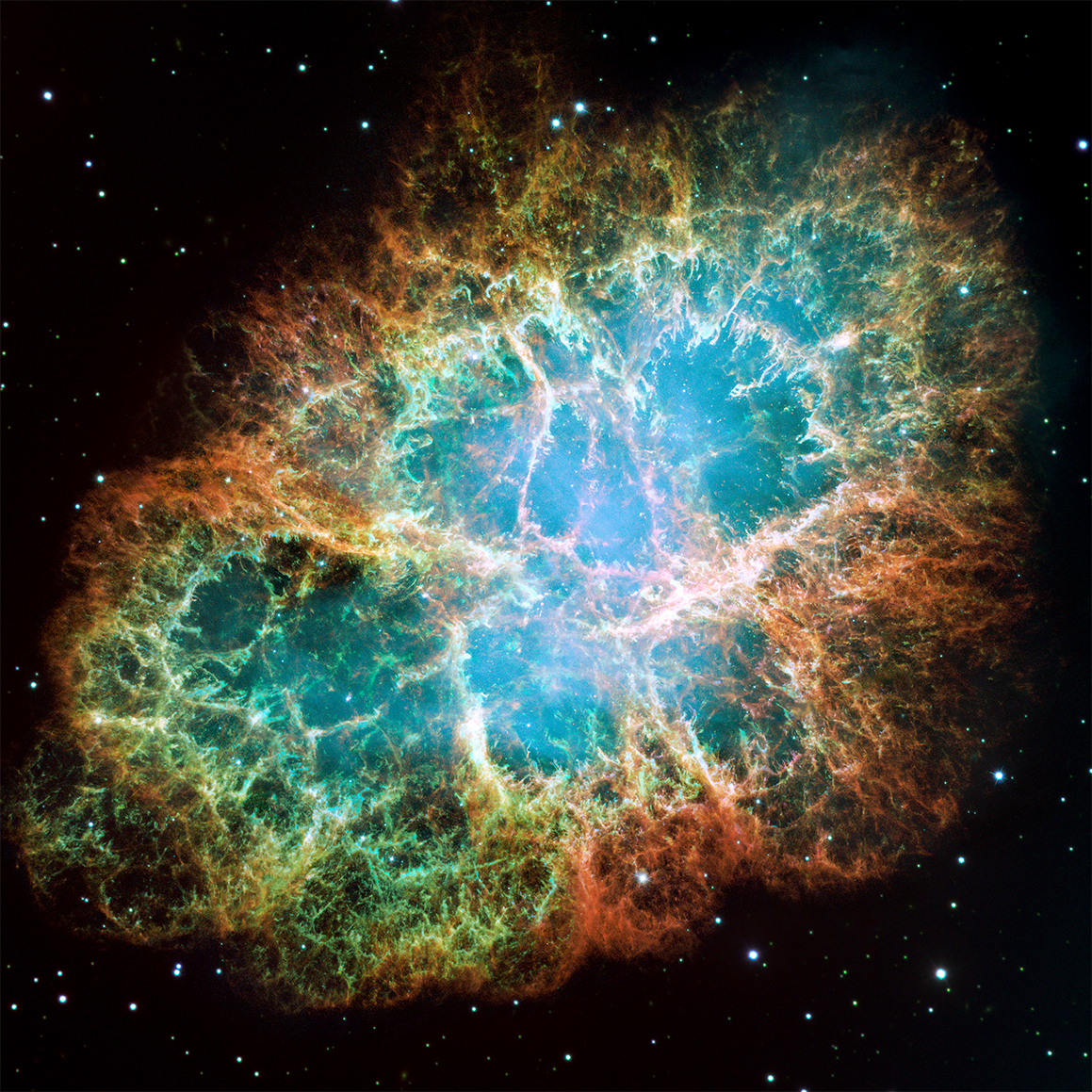
DECEMBER 1, 2005: The Crab Nebula is a six-light-year-wide expanding remnant of a star’s supernova explosion. Japanese and Chinese astronomers recorded this violent event nearly 1,000 years ago in 1054, as did, almost certainly, Native Americans. This composite image was assembled from 24 individual exposures taken with the NASA Hubble Space Telescope’s Wide Field and Planetary Camera 2 in October 1999, January 2000, and December 2000. It is one of the largest images taken by Hubble and is the highest resolution image ever made of the entire Crab Nebula.
A Giant Hubble Mosaic of the Crab Nebula, December 1, 2005, Hubble image, 40 × 40 in. (101,6 × 101,6 cm), Courtesy of HubbleSite and Art in Embassies