


Welcome to 41, rue du Faubourg Saint-Honoré, the Residence of the United States Ambassador to France. I am honored to be the sixteenth Ambassador privileged to live in this magnificent home, featured on the Secretary of State’s Register of Culturally Significant Properties.
In the heart of Paris, this Residence is a masterpiece in its own right and a place where art fosters dialogue between the United States and France. It is our privilege to share exceptional works with you, including pieces by world-renowned artists such as Frank Stella, Helen Frankenthaler, Louise Bourgeois, and Carmen Herrera. These works join the remarkable collection already gracing these walls, including Charles Willson Peale’s portrait of George Washington at the Battle of Princeton and William-Adolphe Bouguereau’s allegorical paintings Fortune, Love, and Friendship.
We are deeply grateful to the Office of Art in Embassies and to the many lenders and partners whose generosity made this exhibition possible, including Bank of America; the Crystal Bridges Museum of American Art; the Lisson Gallery; the Smithsonian American Art Museum; and Julian, Sergio, and Zev Rizzuto.
Welcome to the home of the American people in France.
Ambassador Charles Kushner
Paris, France
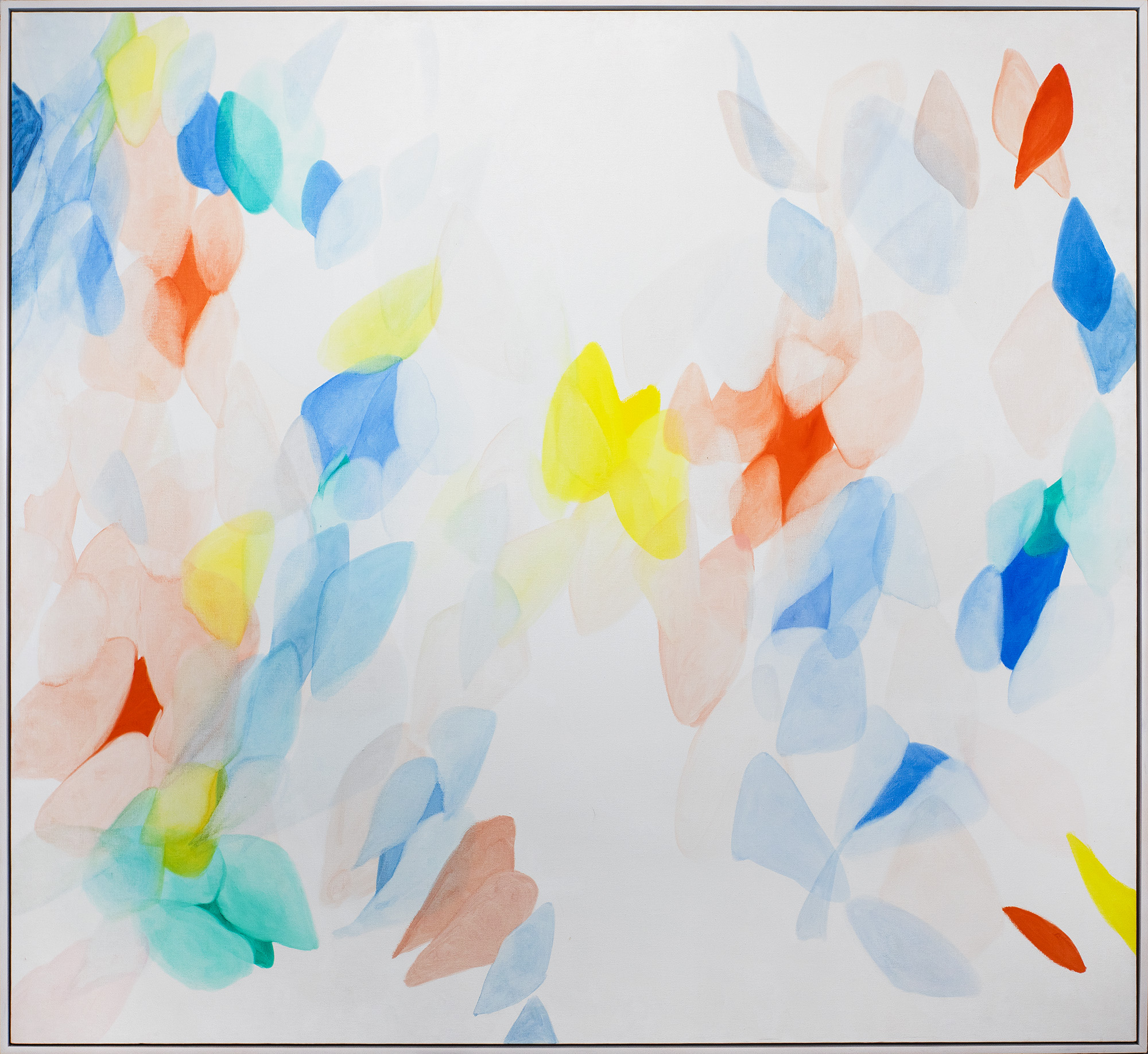
Cloud-like, organic forms that are simultaneously saturated in color, translucent, and luminous define the work of American abstract expressionist painter Alice Baber. While living in Paris among a community of North American artists in the 1950s and 60s, Baber began using experimental methods to achieve chromatic effects in her paintings. She applied diluted layers of oil or acrylic paint to her canvases, using linen rags and turpentine-soaked fabric scraps to lift the pigment layers and create sheer veils of color.
After earning a Master of Arts degree in painting from Indiana University Bloomington in 1951, Baber spent a brief period studying at the École des Beaux-Arts in Fontainebleau. She lived and worked between France and New York for the subsequent decades, exhibiting her art around the world. Her legacy is honored at the Baber Midwest Modern Art Collection of the Greater Lafayette Museum of Art in Indiana and the Alice Baber Memorial Art Library in East Hampton, Long Island, New York.
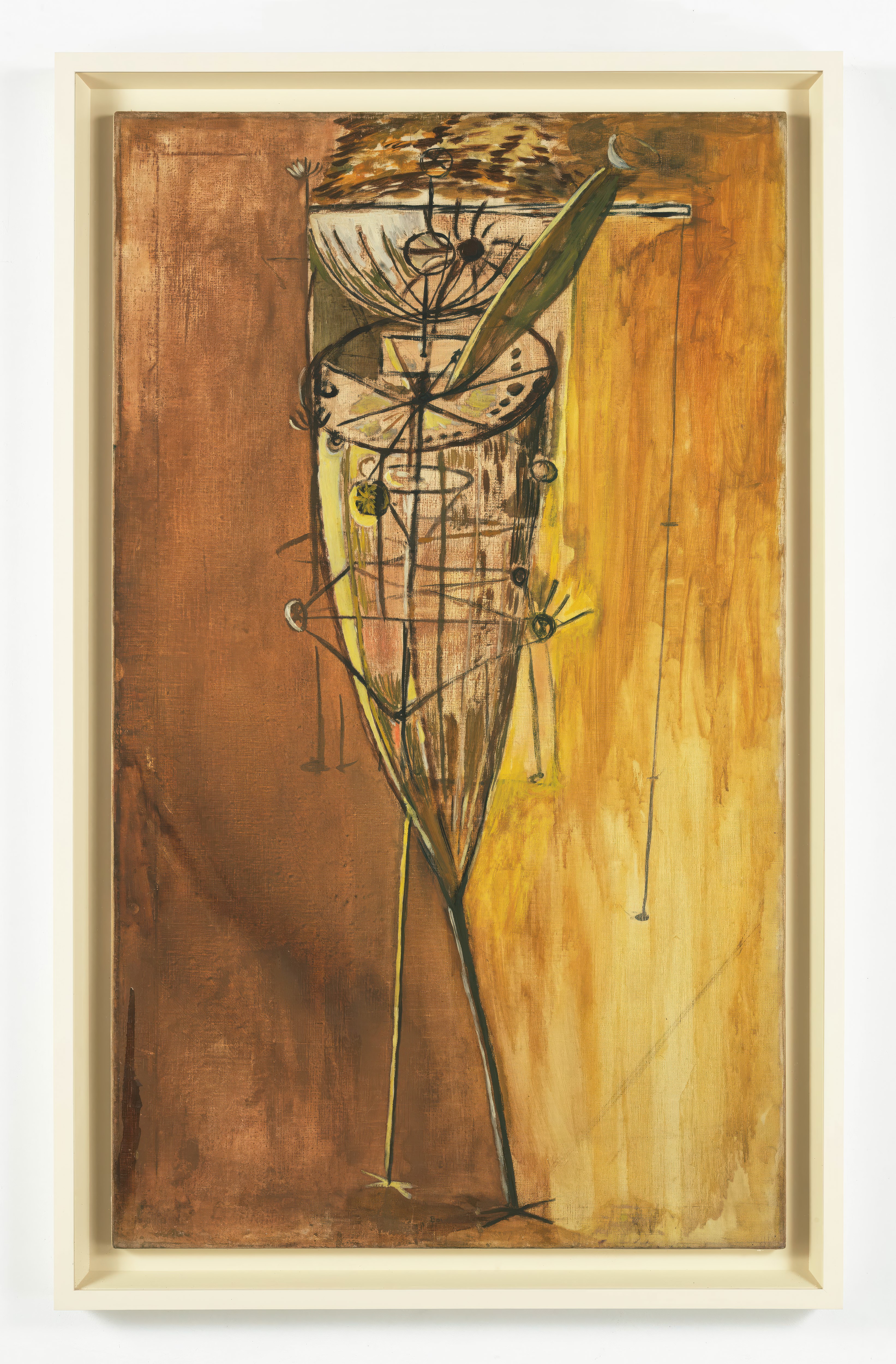
Perhaps most noted for her biomorphic forms and emotionally resonant sculptural work, French American artist Louise Bourgeois approached artmaking as a cathartic and therapeutic process, remarking that “Art is a guaranty of sanity.” After earning a degree in mathematics from the Sorbonne, Paris, she shifted her attention to the visual arts and studied painting and printmaking at the École des Beaux-Arts and other Parisian ateliers. It was in the late 1940s—around the time she created the painting on view in this exhibition—that Bourgeois began to experiment with sculpture, developing motifs drawn from childhood memories that would become central to her later installations and three-dimensional works.
Bourgeois rose to international prominence for her sculptural work relatively late in her career. Her first retrospective opened at the Museum of Modern Art in New York City in 1982 and was notably the museum’s first retrospective dedicated to a female artist. Her accolades include the Grand Prix National de Sculpture, awarded by the French government in 1991, and the National Medal of Arts, presented by the President of the United States in 1997.
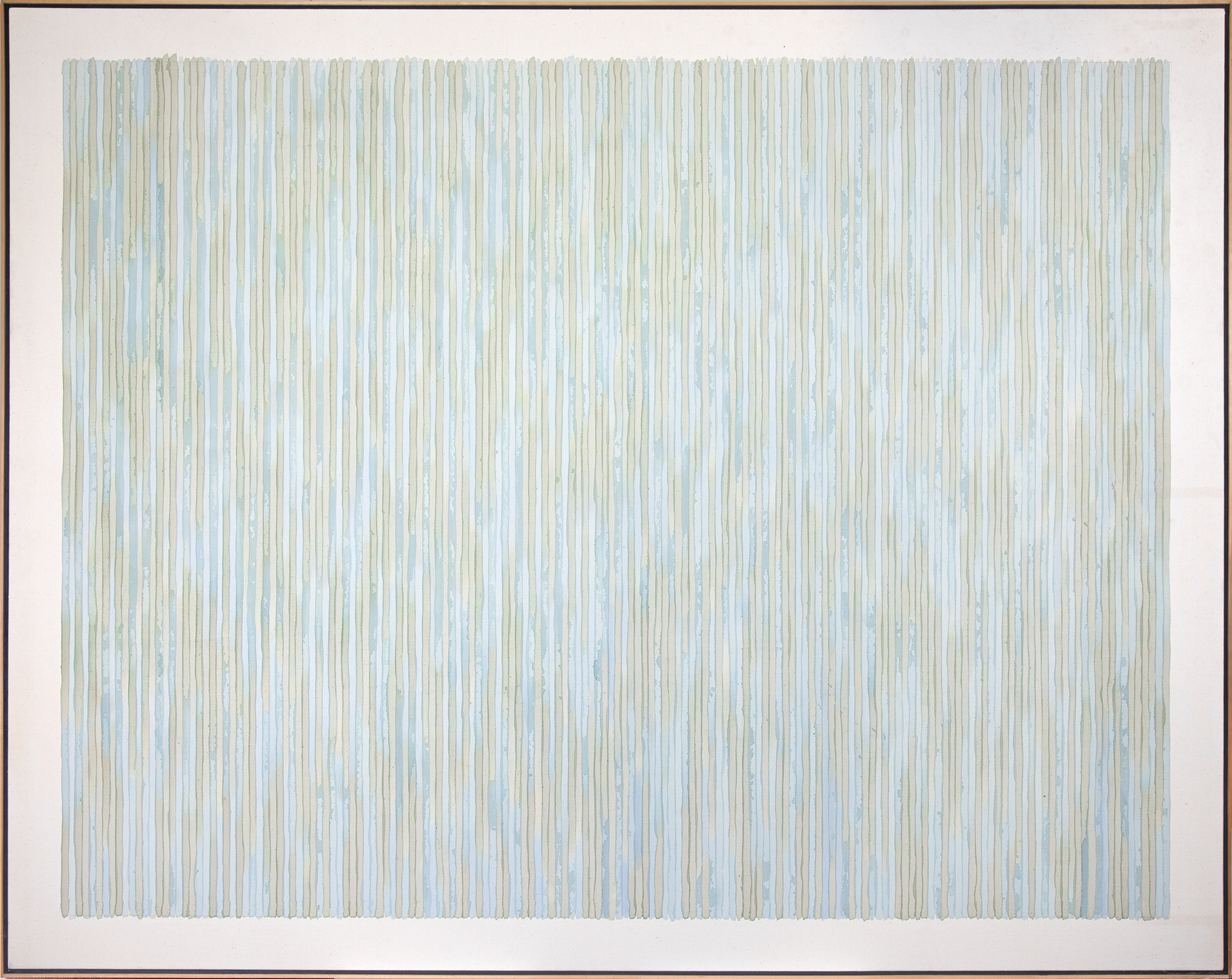
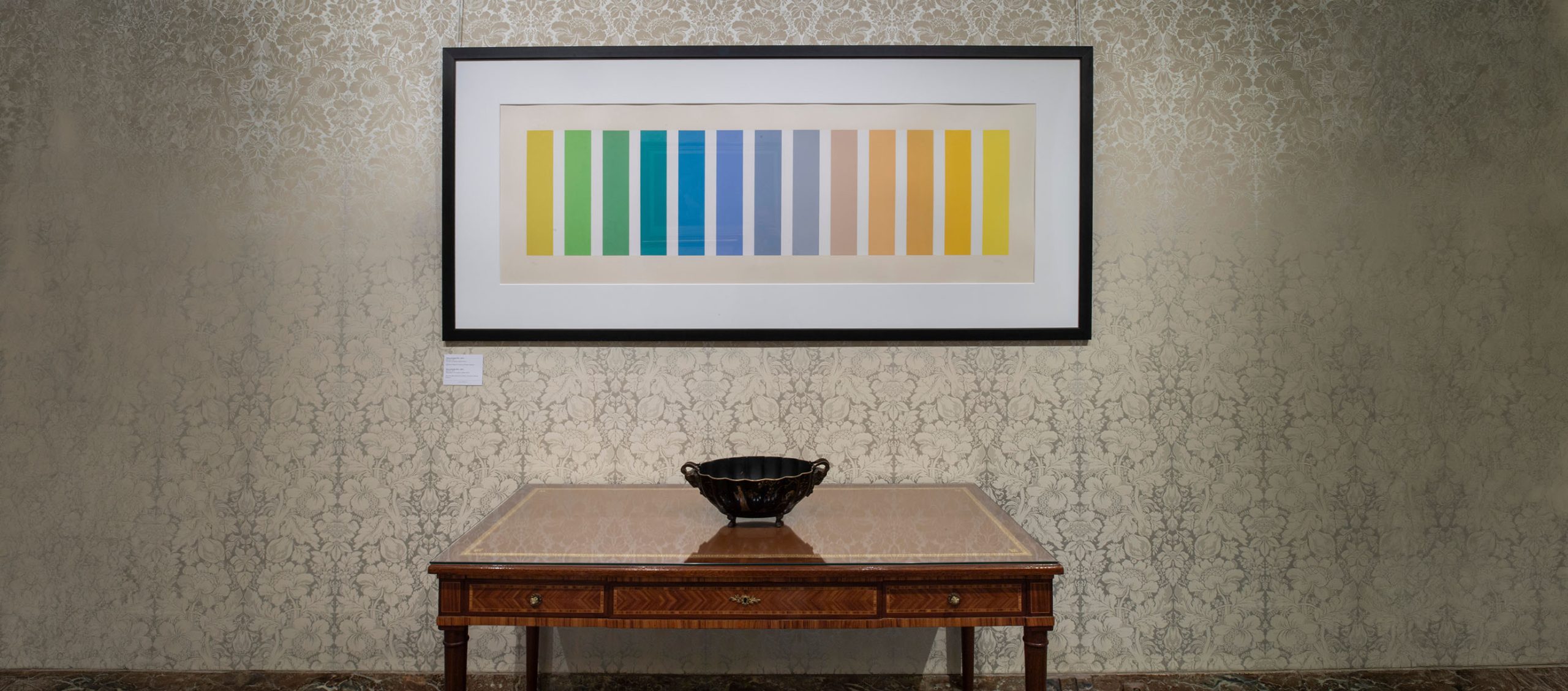
Considered a leader of the Washington Color School, American abstract artist Gene Davis played a significant role in establishing Washington, D.C., as a center for contemporary art in the 1960s. The Washington Color School—a loosely organized group of abstract painters based in Washington, D.C.—emerged from abstract expressionism and the rise of post-painterly abstraction. Davis is best known for his iconic compositions of thin, multicolored, hard-edged vertical stripes, but was also skilled in collage, silhouette self-portraits, and other conceptual pieces. With a strong interest in spontaneity and unorthodox processes to artmaking, Davis often compared himself to a jazz musician who plays by ear, saying that his approach to painting was “playing by eye.”
A longtime resident of Washington, D.C., Davis began his career as a sportswriter and a political journalist and did not begin painting until the age of twenty-nine. Although he initially doubted he could sustain a livelihood as an artist, he ultimately achieved national recognition, and his works are now held in collections of prominent art museums and institutions throughout the United States.
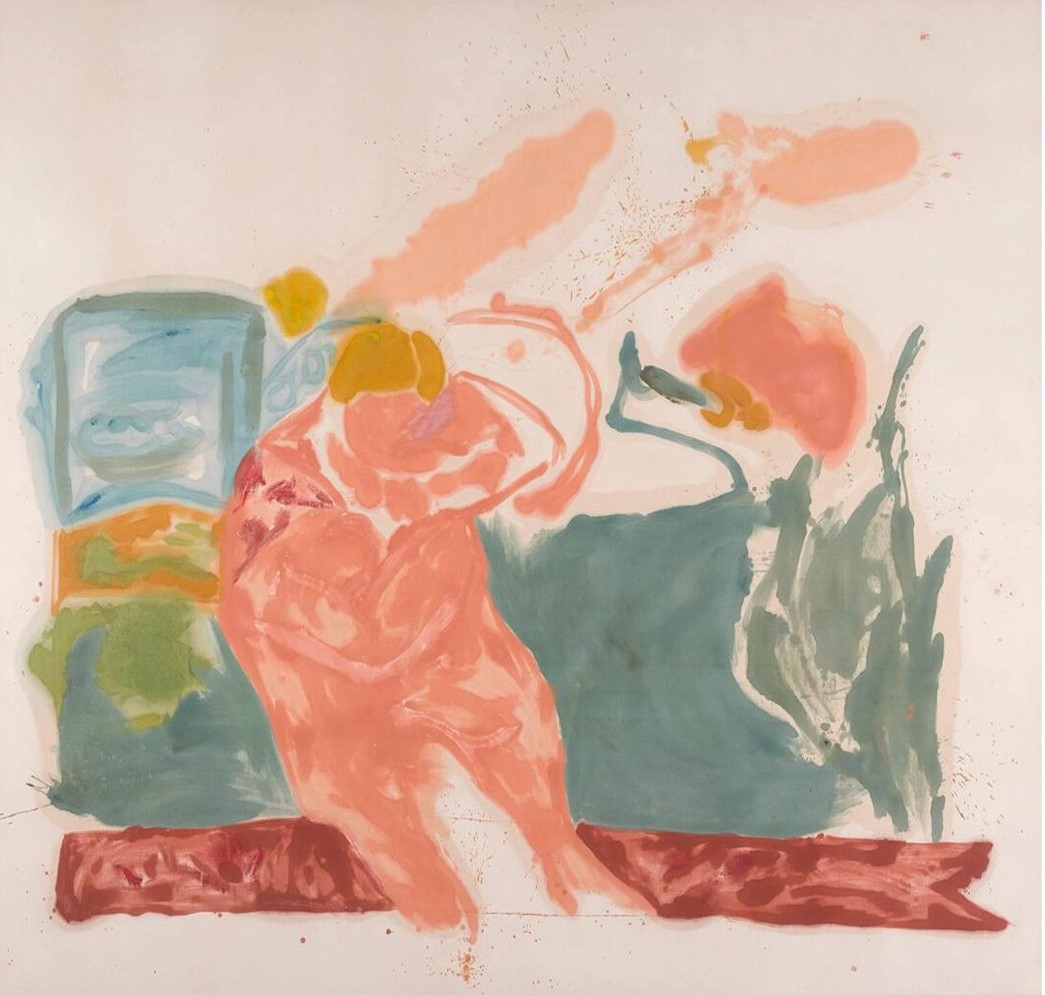
Credited as a pivotal contributor to postwar American painting, Helen Frankenthaler developed a style characterized by organic, abstract masses that emphasize color, simplicity, and spontaneity. She pioneered the soak-stain technique, diluting oil paints with turpentine and then pouring it onto a raw canvas, where the pigments mixed and seeped into the untreated fabric. She later described the origins of this approach as a “combination of impatience, laziness, and innovation.” The method yielded vibrant, translucent layers of color and played an important role in the emergence of color field painting, a movement that emphasized expanses of color as the primary vehicle for visual experience.
Born and raised in New York City, Frankenthaler was also influenced by Parisian cubism. She studied at the Dalton School and Bennington College in Vermont. In 1959, Frankenthaler was awarded first place in the Première Biennale of Paris, establishing herself as a significant figure in the international art scene. Her first major retrospective was held at the Jewish Museum in New York in 1960.
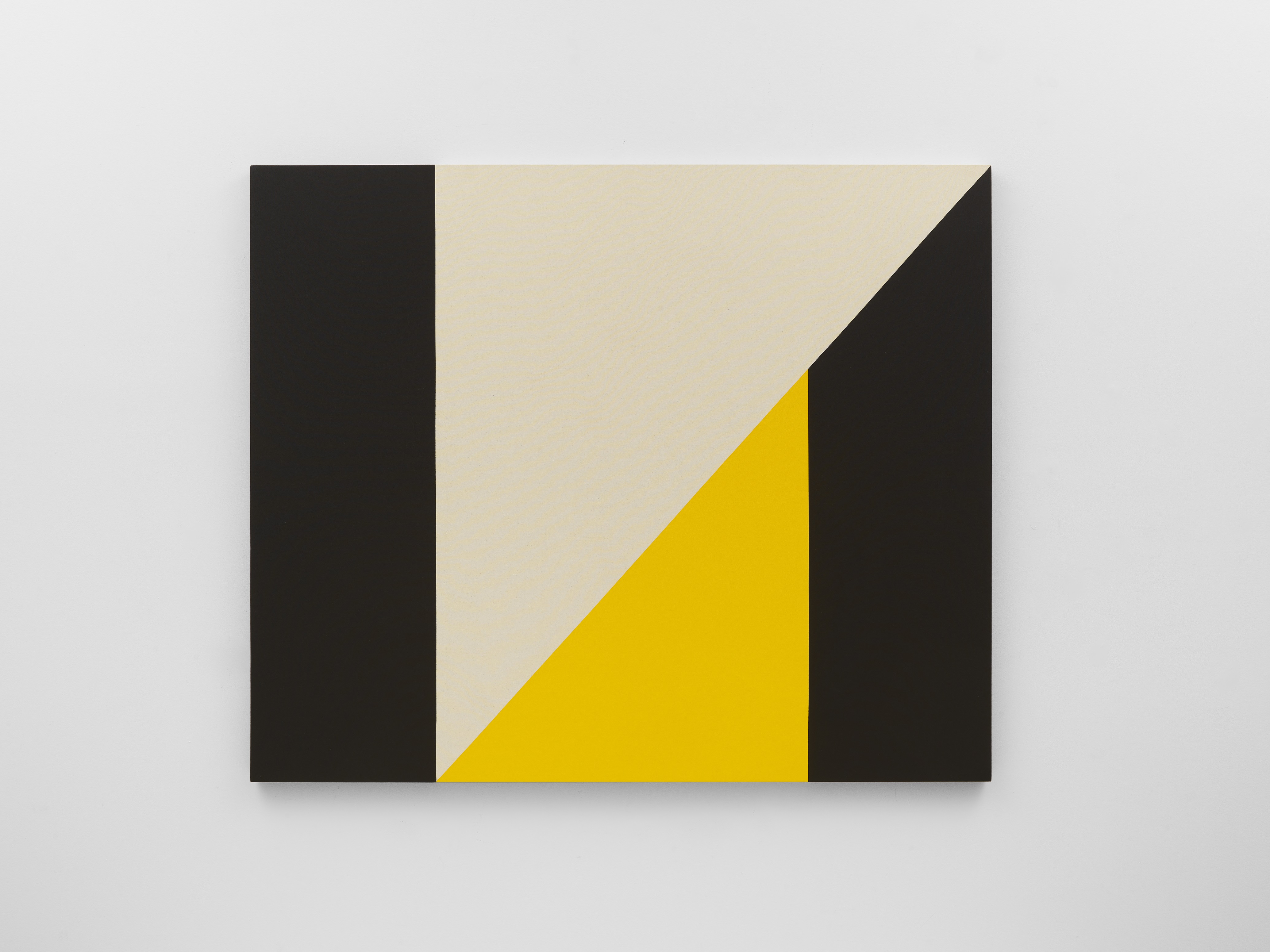
Carmen Herrera was a Cuban American abstract painter, sculptor, and minimalist known for her formal simplicity and striking use of color. She first traveled to Paris at the age of fourteen to attend the Marymount School, where she studied art history, painting, and French. Herrera later returned to Cuba to study architecture for a year at the Universidad de La Habana. Shortly after, she married American Jesse Loewenthal and moved to New York City, where she attended the Art Students League and took printmaking classes at the Brooklyn Museum. Struggling to find an artistic community and a receptive audience in New York, Herrera returned to Paris and shifted her practice from representational forms to purely geometric abstraction—a style that would define the remainder of her career. Despite recognition from the artistic community in Europe, Herrera did not sell her first painting until the age of eighty-nine.
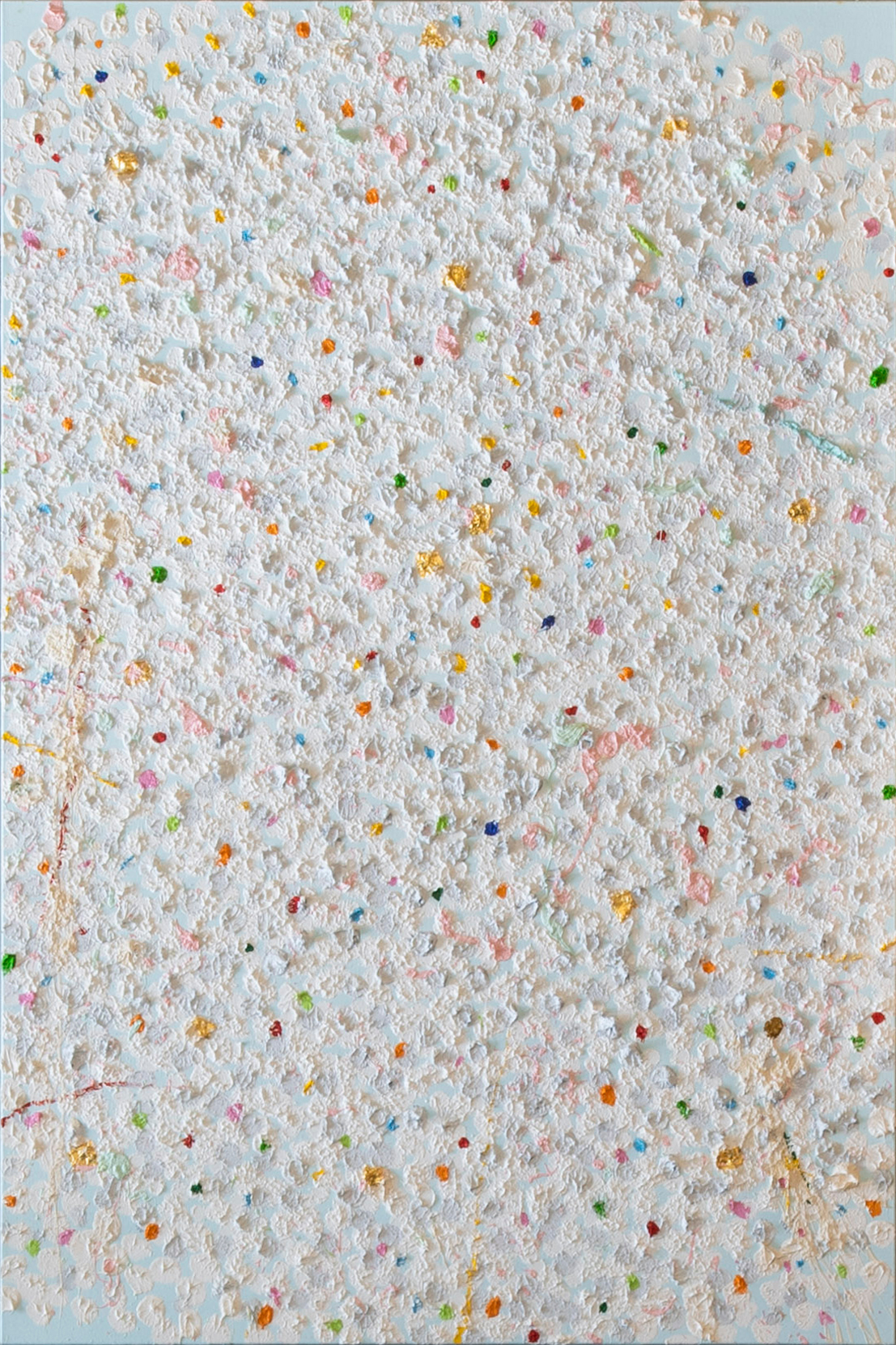
Damien Hirst first gained acclaim and criticism for his Natural History series, which featured animals suspended in formaldehyde-filled steel-and-glass vitrines. Throughout his career, the English conceptual artist has explored themes of death, rebirth, morality, and beauty. Lamb is part of his Reverence Paintings, a group of works in which Hirst applied dabs of color and flecks of gold leaf to monochrome canvases. Built up through layered dots and marks, these paintings reflect his sustained interest in color, pattern, and serial structure—the foundation of his best-known Spot Paintings. Throughout his practice, Hirst draws from abstract expressionism, pop art, fauvism, and pointillism.
Hirst studied at Goldsmiths College, London, and was a member of the Young British Artists. He was the subject of his first solo exhibition at the Woodstock Street Gallery in 1991 and awarded the prestigious Tate Gallery Turner Prize in 1995. In 2012, the Tate Modern, London, presented Hirst’s first museum retrospective, and in 2015, he opened his own art space in London, the Newport Street Gallery.
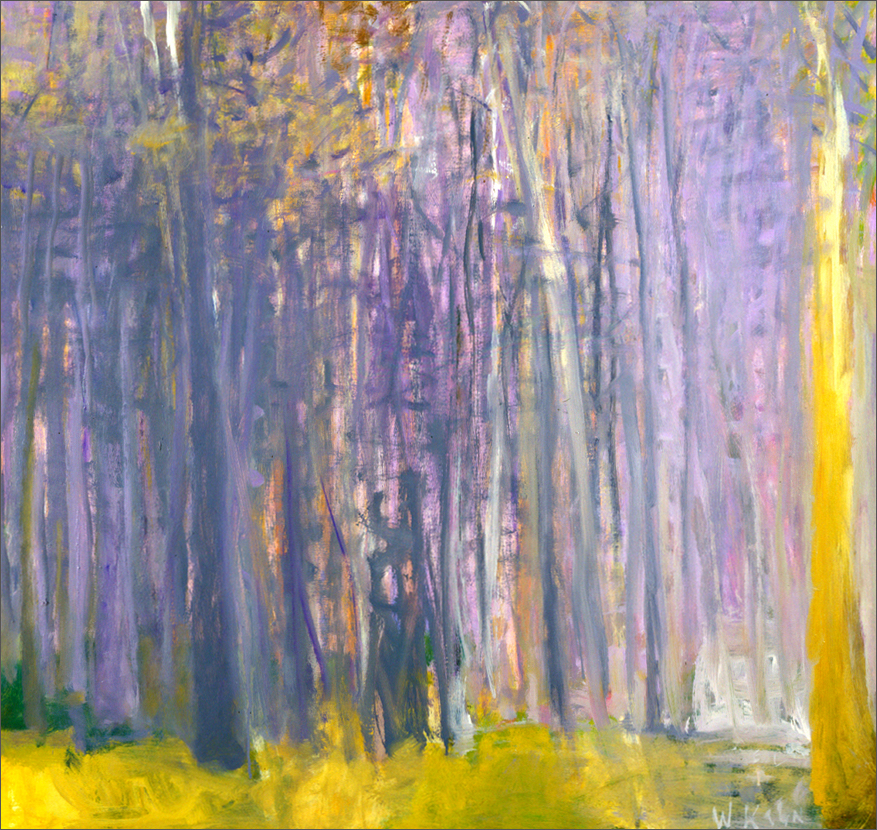
German American painter Wolf Kahn is known for his nuanced use of color and light, creating landscapes that capture atmospheric shifts within a two-dimensional plane. Although his painting style shows similarities to abstract expressionism, Kahn considered his practice grounded in formalism, and his compositions draw upon aspects of American realism. His recurring subjects—fields, forests, houses, and barns—were inspired by the landscape in and around his farm in Vermont, where he spent his summers.
At the age of twelve, Kahn fled Nazi Germany and immigrated to the United States. After serving in the U.S. Navy, he studied painting with renowned teacher and abstract expressionist painter Hans Hofmann through the GI Bill and later earned a Bachelor of Arts degree from the University of Chicago, Illinois. Although closely tied to New York and Vermont, Kahn traveled widely—lecturing, teaching, exhibiting and making art across the United States and in France, Kenya, Italy, Egypt, Namibia, and even in Germany.
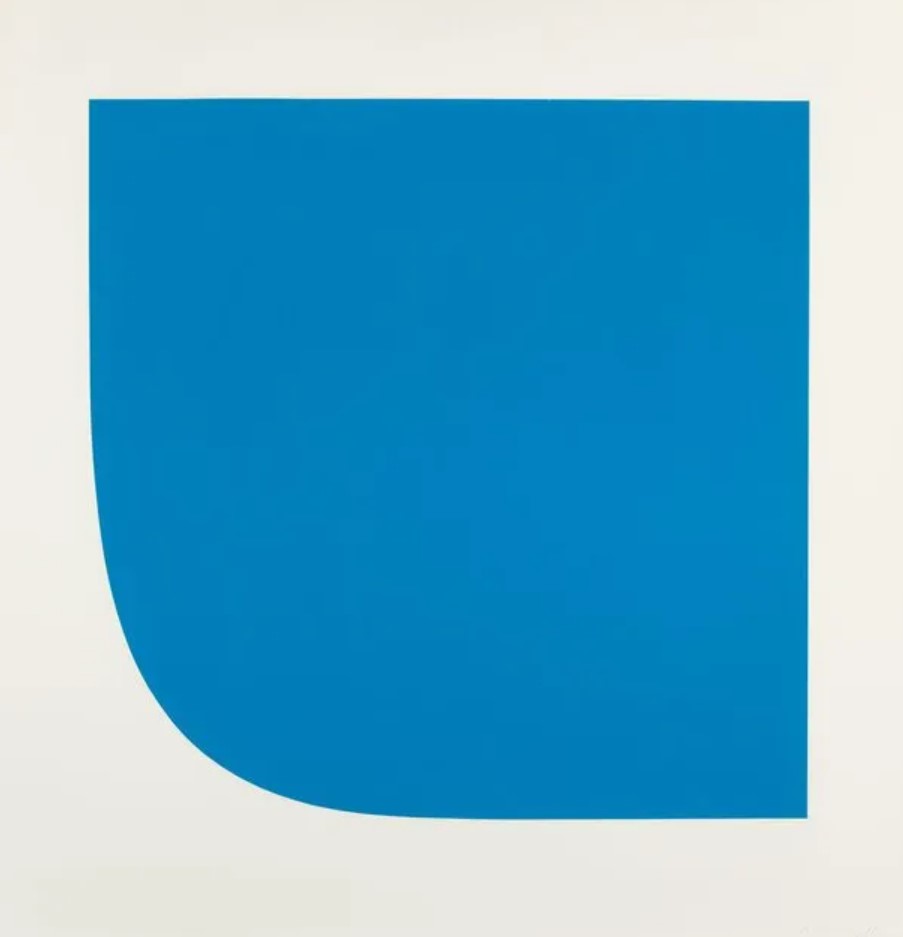
American painter, sculptor, and printmaker Ellsworth Kelly was known for his significant contributions to color field painting, hard-edge painting, and minimalism. He began his art education at the Pratt Institute in Brooklyn, New York, but left to serve in the U.S. Army during World War II, spending time in France in 1944. After his military service, and with the help of the GI Bill, Kelly continued his studies at the School of the Museum of Fine Arts, Boston, and later at the École des Beaux-Arts, Paris.
While living in Paris, Kelly was inspired by Romanesque art and architecture, Byzantine art, surrealism, and neo-plasticism. His time there proved instrumental in his artistic practice; during this period, he transitioned from figurative compositions and easel painting to geometric abstraction. Over his six-year stay in France, Kelly created the first of what would become one of his signature styles: large-scale multi-panel paintings in which each panel features a different color. Although highly abstracted, his compositions often originated from direct observations of the real world.
Prolific painter, sculptor, and printmaker Frank Stella is recognized for his pivotal contributions to minimalism, post-painterly abstraction, and color field painting. Born in Massachusetts, he studied art at Princeton University, New Jersey, before relocating to New York, where he quickly gained acclaim for his first major series, the Black Paintings, which were included in an exhibition at the Museum of Modern Art.
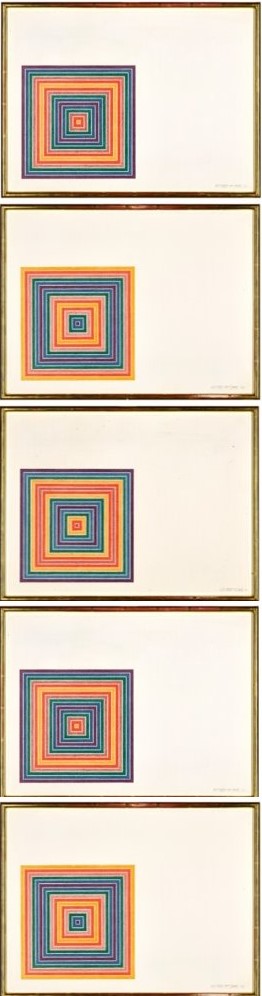
Despite early success, Stella continued to experiment with form, geometry, space, and material to push the limits of abstraction. The lithograph Multicolored Squares is representative of his exploration into printmaking and in 1973, he installed a print studio in his New York home. Later in his career, Stella expanded his practice into three-dimensional works, developing sculptures and deep-relief paintings that challenged conventional definitions of abstraction. Rejecting many of the norms associated with artmaking, and in discussing minimalism, Stella famously remarked, “What you see is what you see.”