


In selecting art for Villa Petschek, the storied U.S. Ambassador’s Residence in Prague, we wanted to convey the warmth and hospitality of the United States while honoring the historic home itself. The scale and subjects feel at home in such a grand space, even as the works invite guests to encounter what we love most about our country.
The American spirit is one of openness, hospitality, and freedom, and this exhibition reflects those ideals while remaining deeply rooted in Texas, our home for many years. The landscapes invite the viewer into the scenes through a winding paved road, a rocky path, or a canopied trail. Several of the works evoke a slower, more contemplative pace: a rowboat drifting, moonlight on water, or fields of bluebonnets. And in all of the art, there is a sense of grandeur and wonder in the natural world, from panoramic vistas to luminous clouds to colorful bird feathers. None of what we see here was created by man, yet it reminds us of the beauty that surrounds us—and perhaps calls us to something greater than ourselves.
Ambassador Nicholas Merrick and Leslie Merrick
Prague, Czech Republic
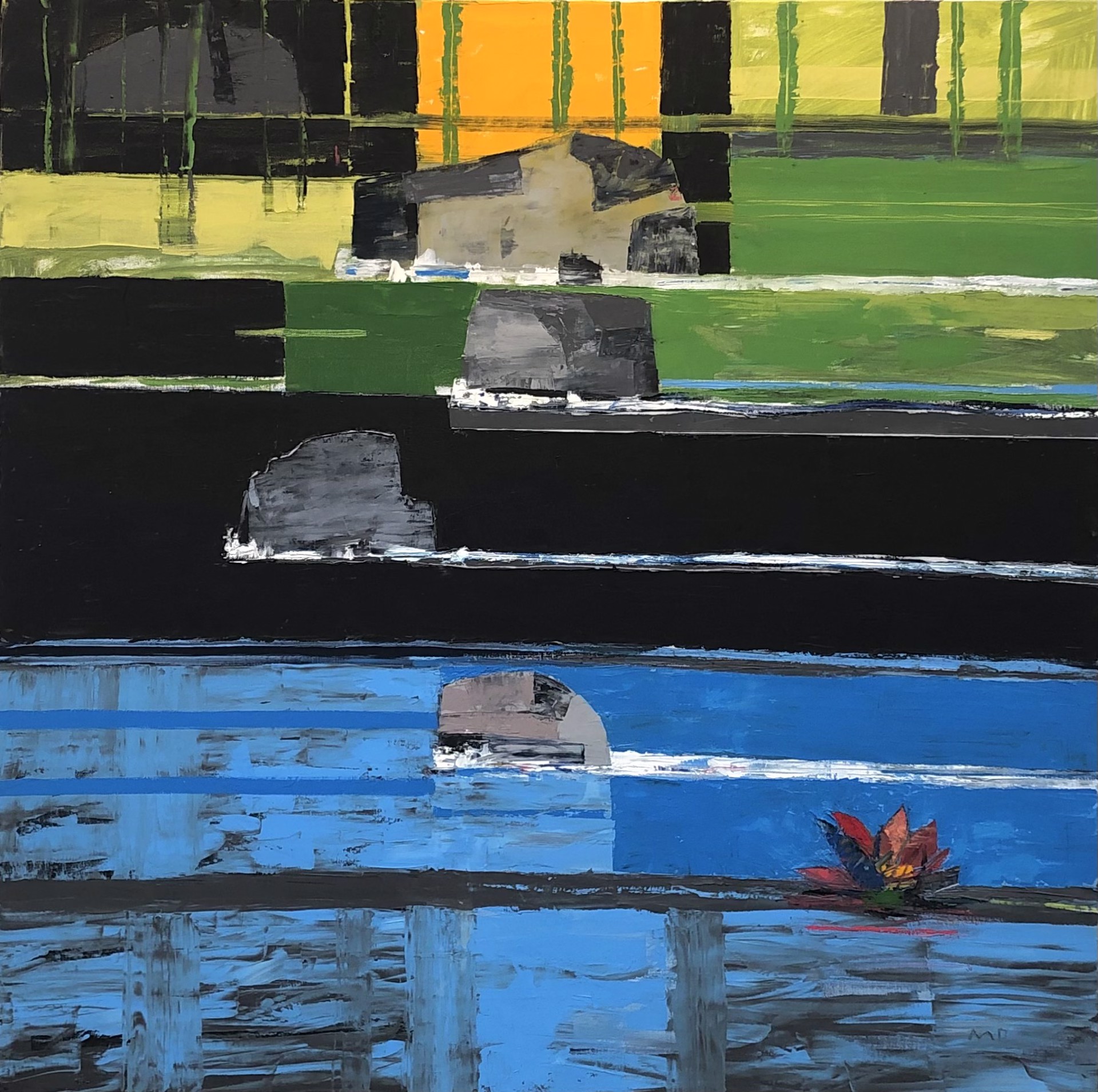
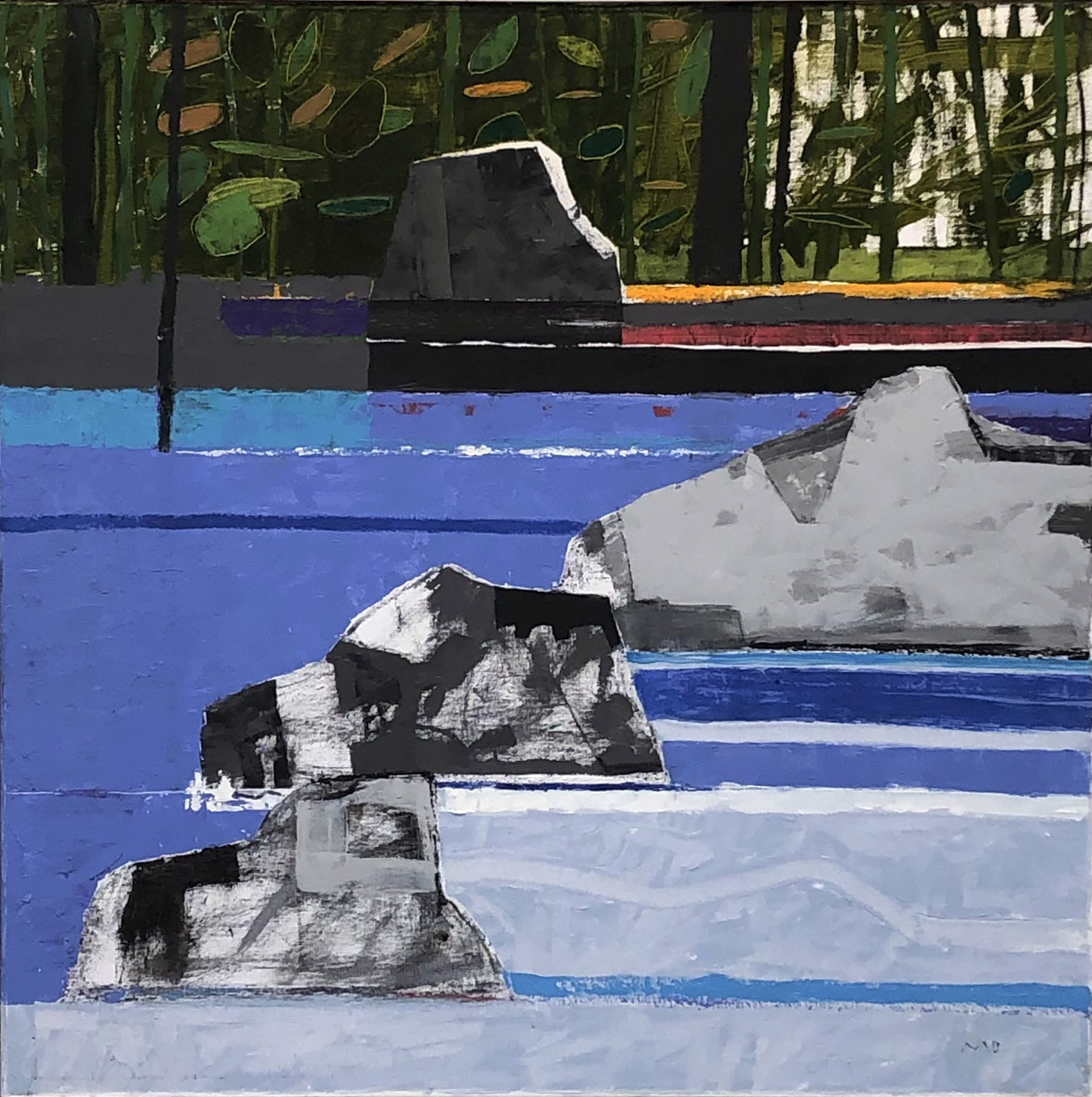
Mac Ball describes his paintings as abstracted landscapes with “an increasingly textured surface over the years.” Ball stopped using paintbrushes in 2015, instead opting for a palette knife to produce a shimmering quality in his work. Bitterroot 100 and Bitterroot 101 are part of a series of more than one hundred paintings of the Bitterroot River in western Montana. A dedicated fly fisherman, Ball always admired highland streams and rivers “with their boulders, reflections and transparency.” The imagery in his Bitterroot series is loosely inspired by the Japanese Zen gardens in Kyoto.
In addition to painting, Ball has created ceramics and served as principal designer at Waggonner & Ball, the New Orleans-based architectural firm. His experience in architecture, including preservation and adaptive reuse projects, has greatly influenced his paintings.
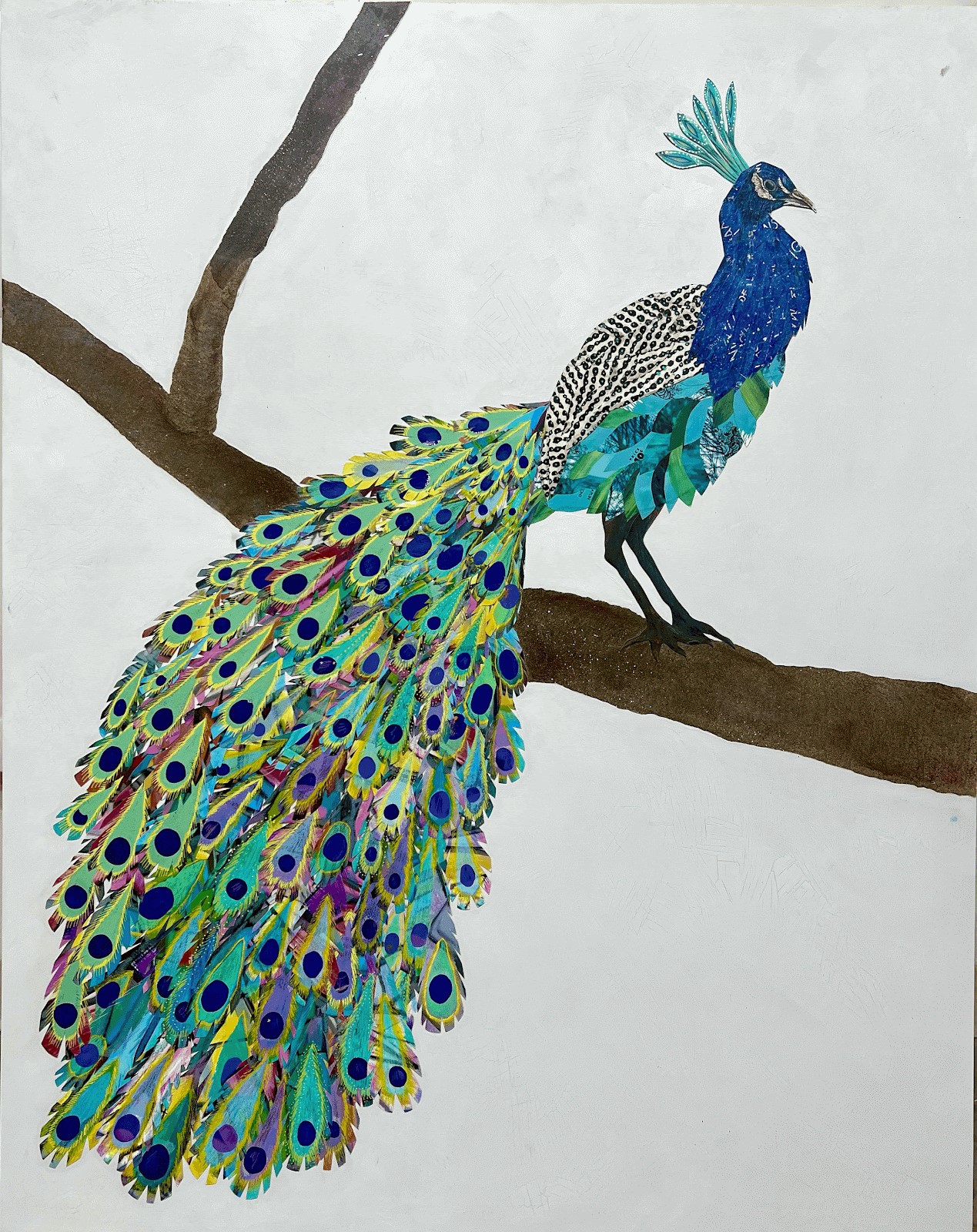
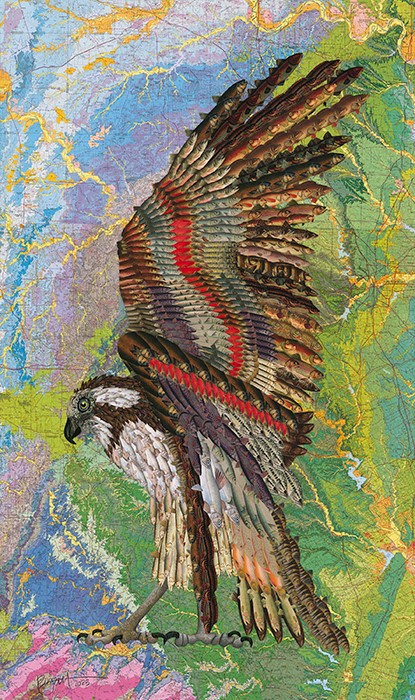
Brenda Bogart constructs mixed-media collages “defined by her signature sense of color, pattern, and texture.” Many of her pieces use found objects and paper collected from her travels; she also integrates hand-lettered antiques and ephemera from Paris. Peacock Vilém was created between 2022 and 2025 in collaboration with her daughter, artist Stephanie Stephenson. Assembled from vintage and found papers, archival prints of earlier works, and hand-painted papers, the piece is named in honor of Bogart’s husband, William—Vilém being the Czech spelling of his name. Part of her Birds of Prey series, Standing Osprey 1 is composed of hundreds of individually hand-cut images of fish, along with watercolor, colored pencil, found paper, and vintage magazines. The background consists of original vintage Texas oil and gas field maps mounted on a custom wood panel.
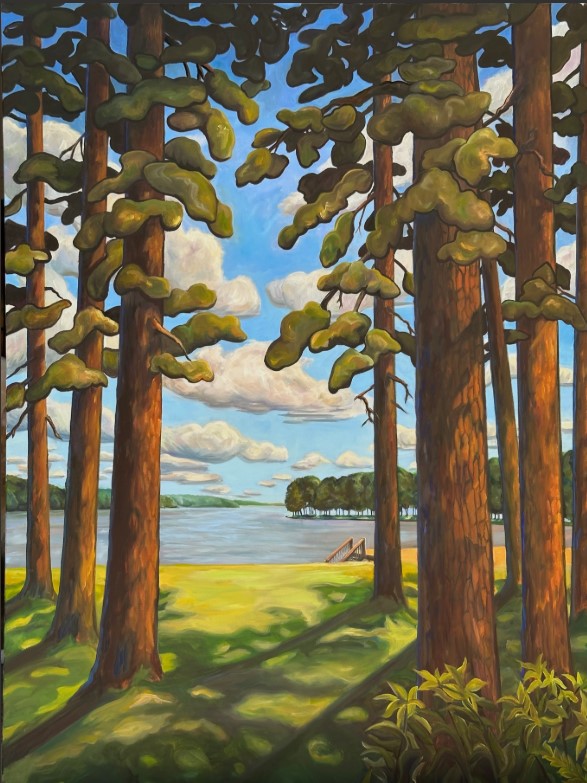
Kristine Byars paints large canvases filled with vivid colors, warmth, and a touch of wit. Born and raised in an artistic family, she was encouraged at an early age by her grandmother to paint. After a career in graphic design, Byars returned to painting full time in 2004. Her oil paintings carry a strong sense of place and personality, often depicting outdoor recreation, Americana, horses and cowboy culture. Return to the Cove captures a serene lakeshore in East Texas, where golden sunlight filters through the towering pines, giving the scene a warm, nostalgic stillness.
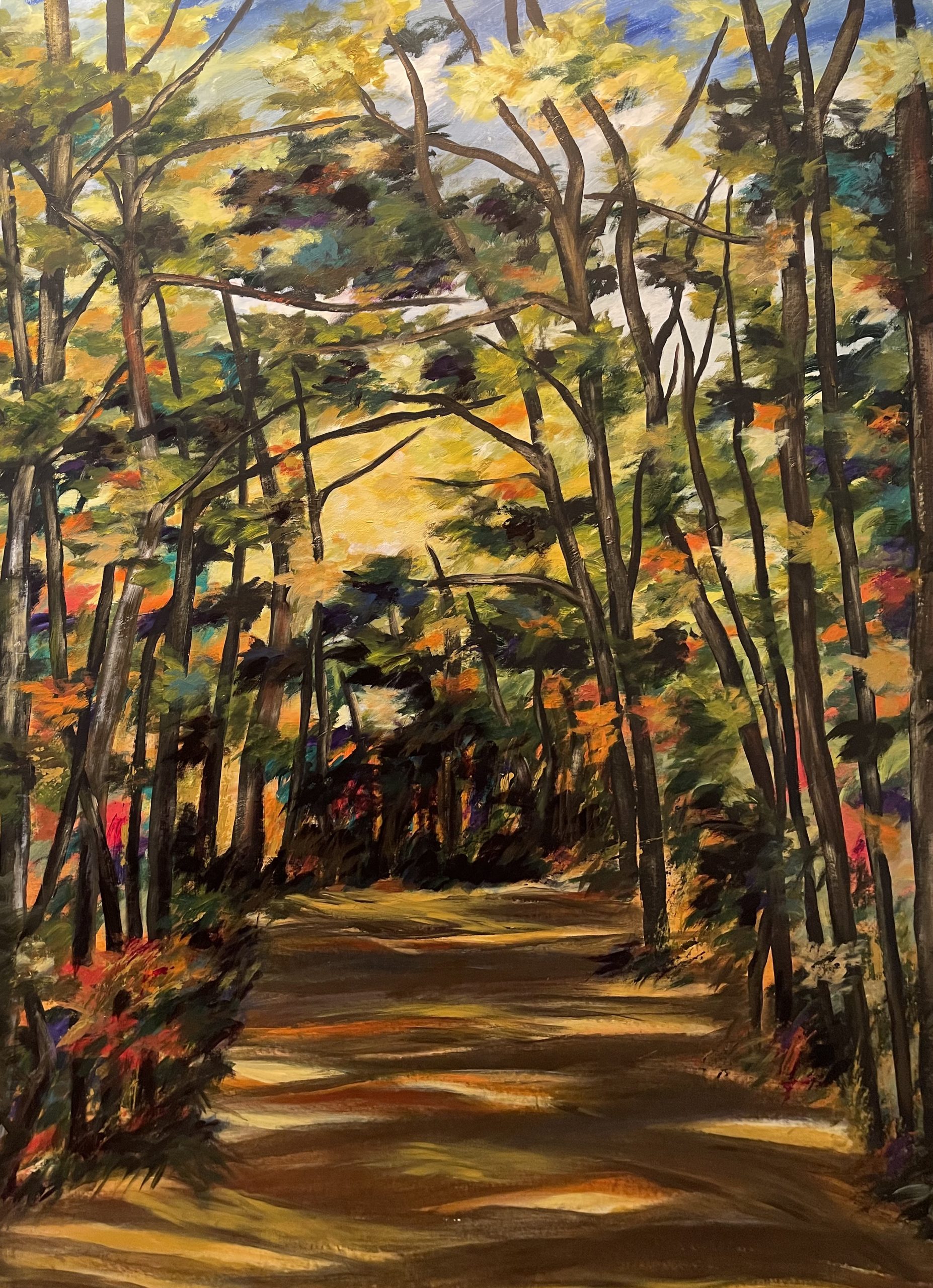
Kitty Klaidman’s artistic practice reflects memories shaped by her experience of the Holocaust in early childhood. As one Washington Post critic said, “The very sparseness of [Klaidman’s] work…speaks quietly of the hardness of those years and the strength of the human spirit.” After World War II, she moved to Israel and then the United States, where she began to paint. Her delicate, richly toned acrylic paintings convey a quit brightness and a sense of movement in natural landscapes.
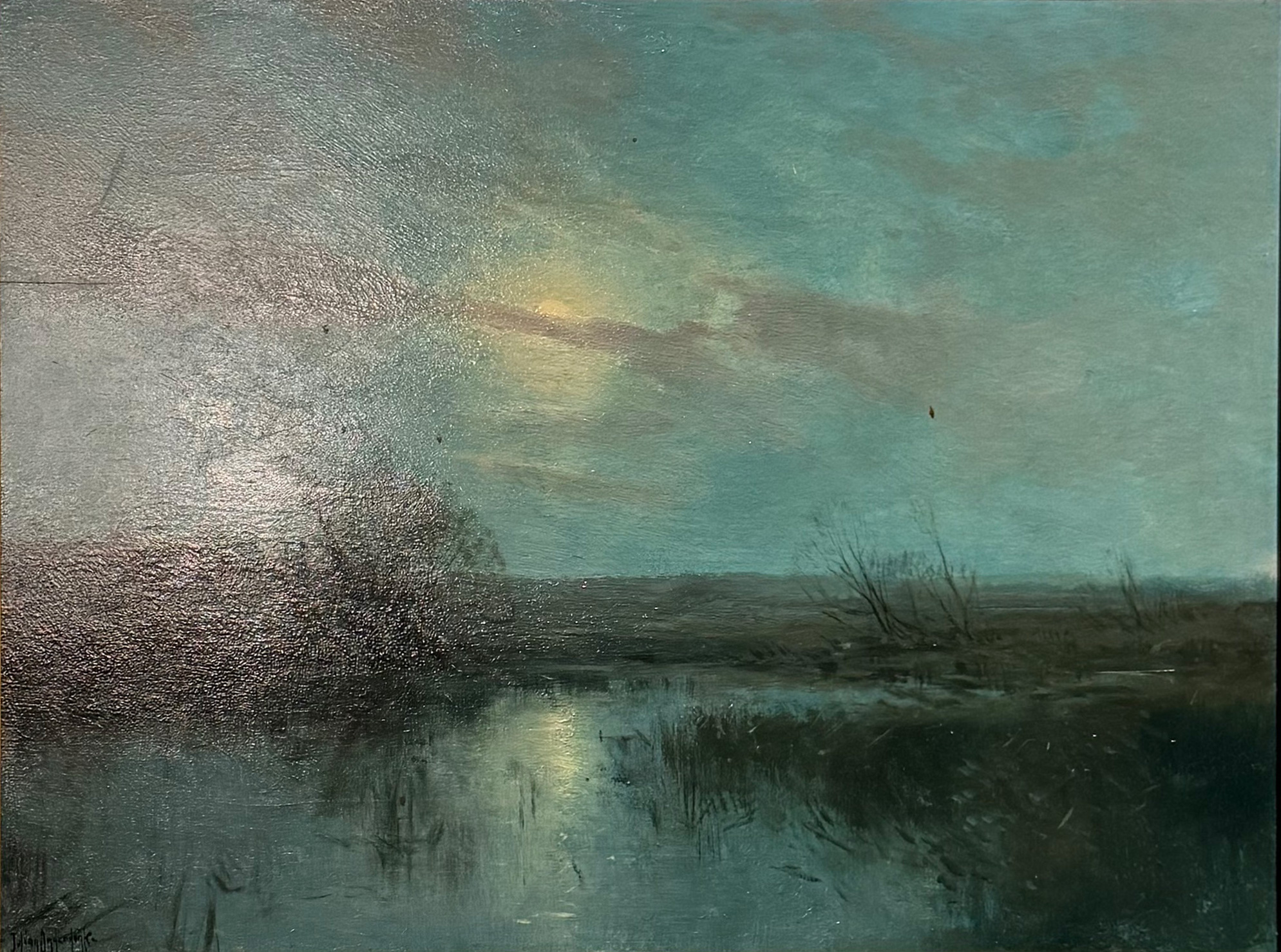
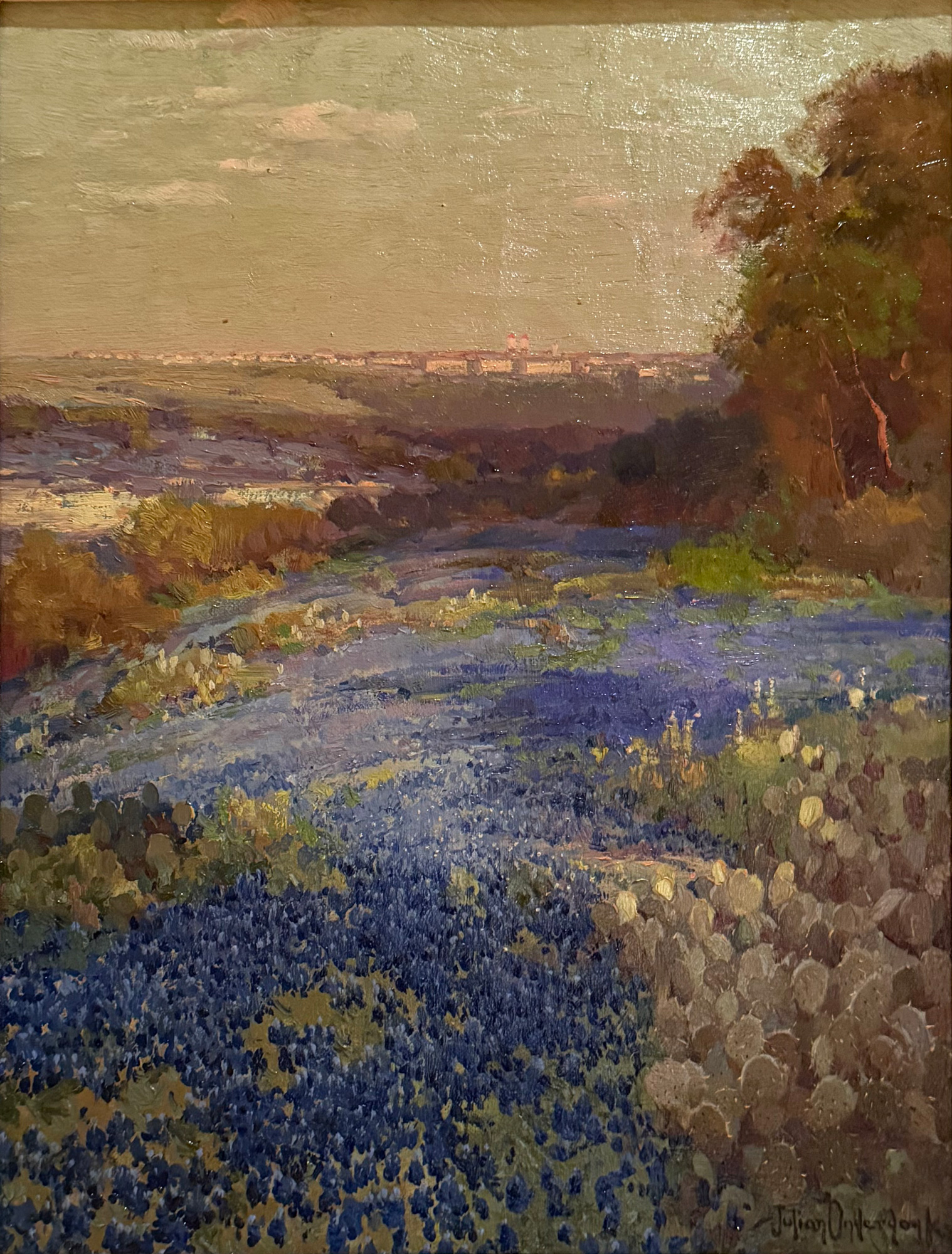
Born in San Antonio, Texas, to a family of artists Julian Onderdonk moved to New York at the age of nineteen to study with William Merritt Chase, a leading figure in American impressionism. After working in New York as an artist for a few years, Onderdonk returned to San Antonio with his wife and daughter. Among the first artists to devote significant attention to the Texas Hill Country, he became known for his landscapes, particularly those depicting the state’s characteristic bluebonnet flowers.
Don Resnick was a landscape painter drawn to the beauty and magnificence of Long Island, New York’s terrain, sea, and sky. Resnick would sketch and draw from nature, but he never painted outdoors. Depicted with loose brushwork and “watercolor-like lucidity,” his luminous paintings sought to communicate his vision of the environment. “The inspiration for my paintings is the intense experience of a place—its particular light, its particular space—at a unique moment in time,” he said.
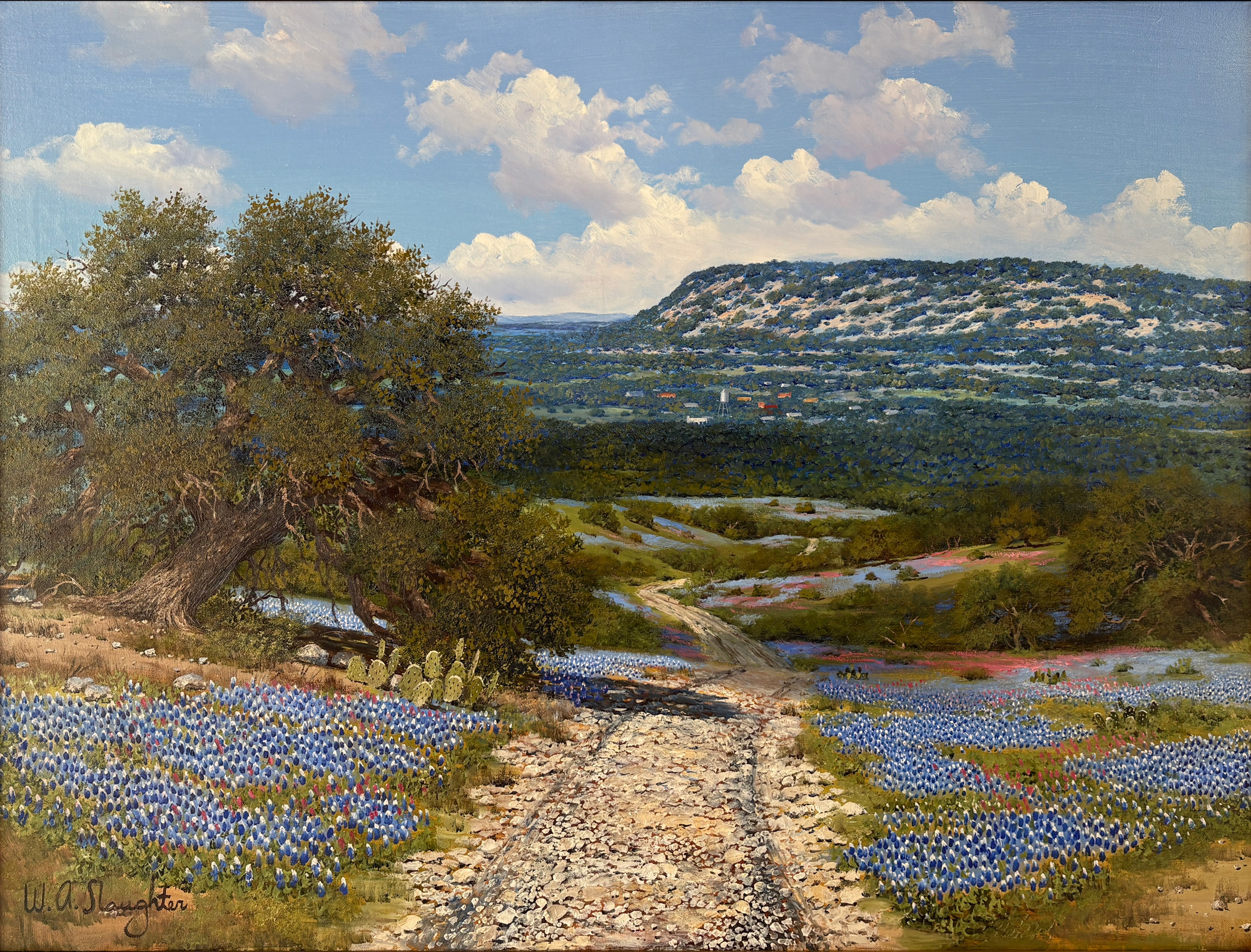
William Slaughter was a self-taught artist who specialized in figure paintings, still life, and portraits of women and children. He became known for his Texas landscapes, which depict scenes filled with bluebonnets, live oaks, and rambling streams in a realist style. A lifelong Texan, Slaughter was ordained as a Lutheran pastor before moving to Dallas, where he began exhibiting his work at local art and craft shows, including as a member of the Artists and Craftsmen’s Association. After nineteen years in the clergy, Slaughter decided to retire and pursue art full time. “I never really left the ministry. I now relate to people through my paintings, rather than words. There are sermons in trees and seas,” Slaughter stated.
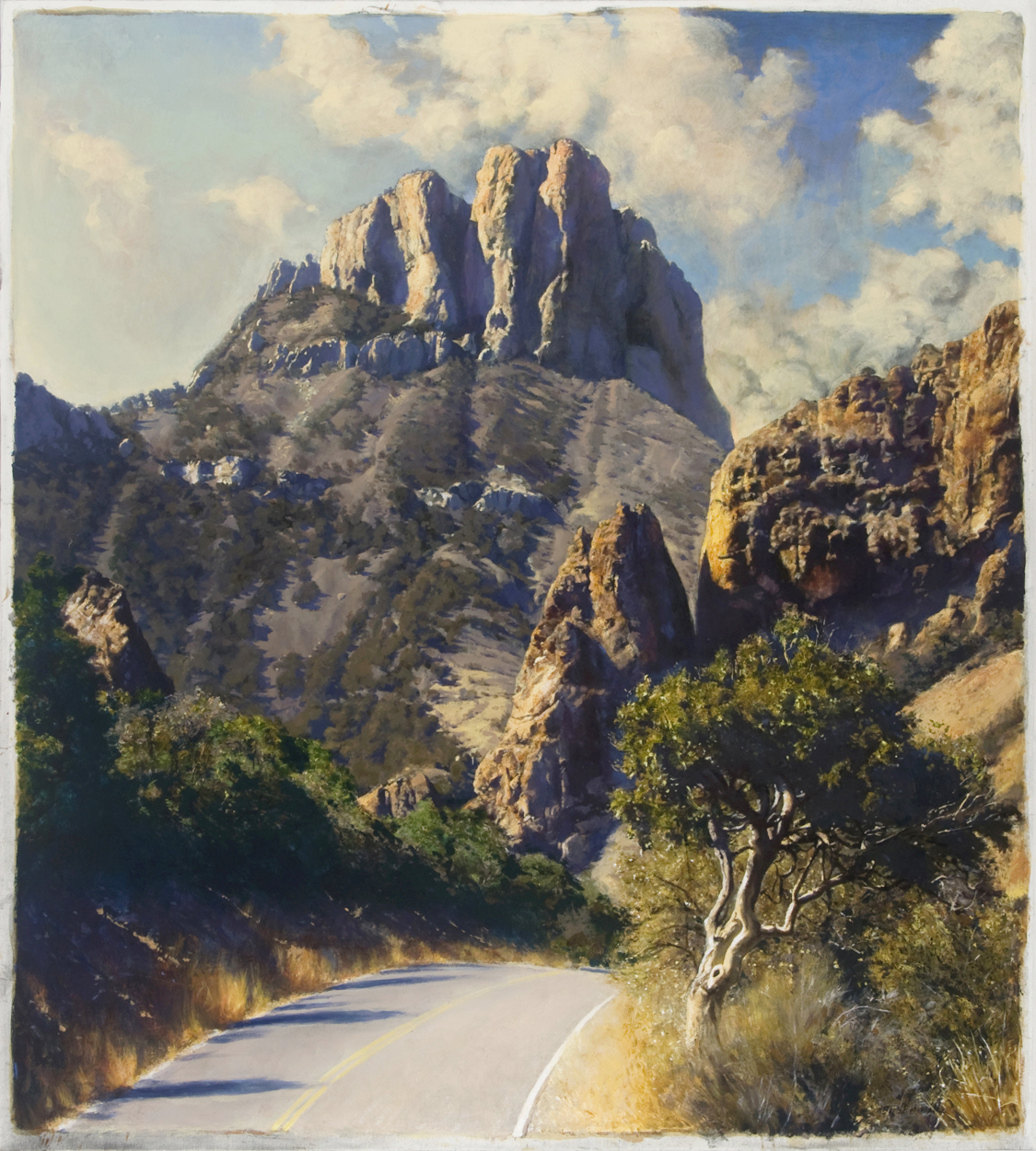
Bob Stuth-Wade has dedicated more than fifty years to portraying the beauty and spiritual essence of nature in his drawings and paintings. Often painting en plein air, he creates naturalistic representations of Texas, drawing from places such as Big Bend National Park, the Colorado River near San Saba, and the landscape around his home in central West Texas. He begins with small plein air sketches, later developing larger, more complex works in his studio.
“Beginning a painting is complicated. There are many things to consider. Value, shape, color, texture, materials, and meaning. As a painting progresses, all of these elements ‘come together’ until finally the pieces become one visual statement… Painting is a practice that condenses disparate experience into a coherent, visual language,” Stuth-Wade said.
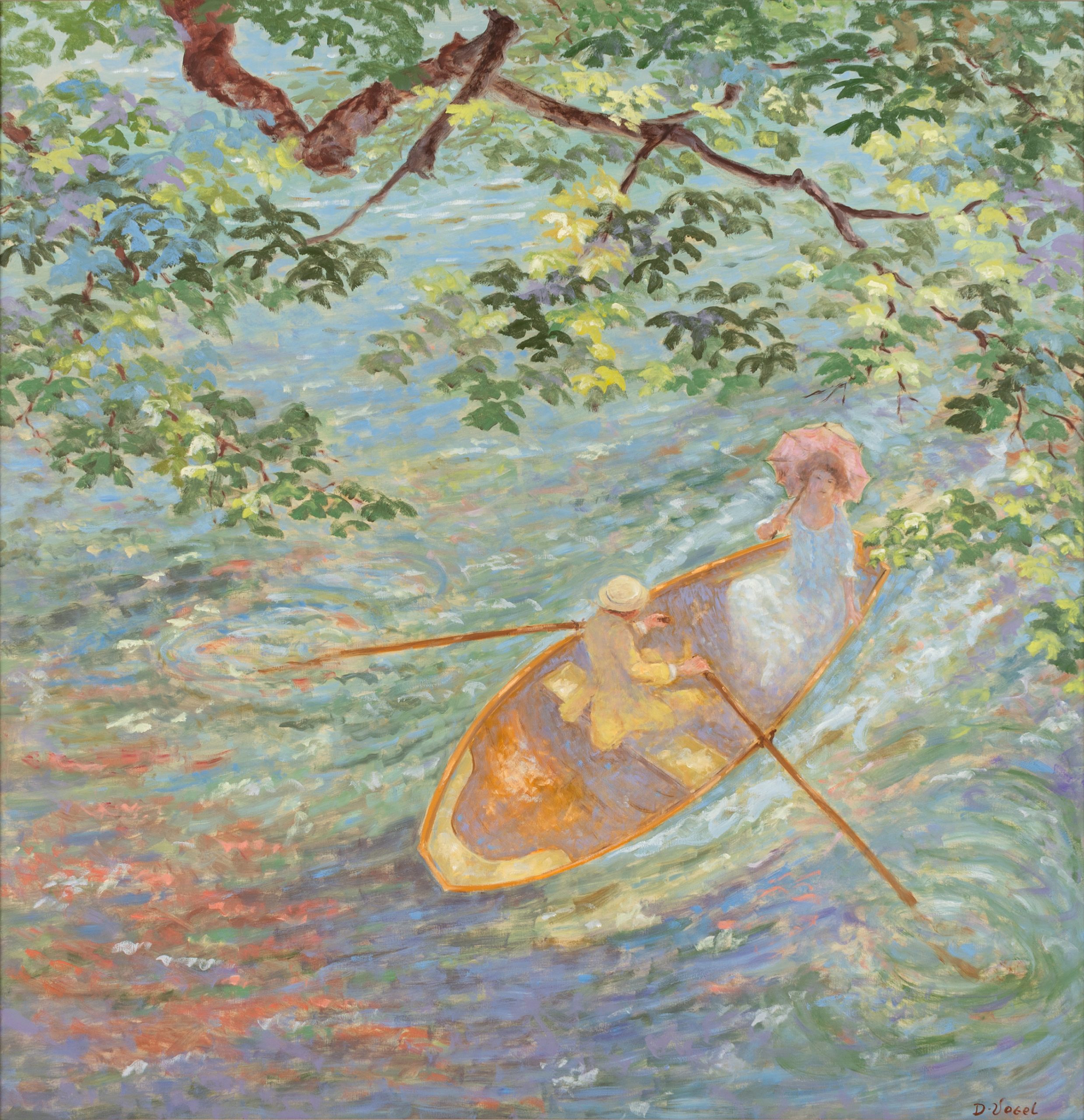
Over a career spanning more than sixty years, Donald Vogel was profoundly influenced by impressionism and post-impressionism. Vogel painted interiors, still lifes, and landscapes such as From Above, in which figures often appear engaged in subtle movement. He began each work with a sketch, then recreated elements of the drawing on canvas or panel using burnt umber or raw sienna thinned with turpentine. From there, he established the structure of the composition before painting more freely with color. His brushwork was quick and direct, rhythmically flowing between palette and canvas often in sync with the music playing in the background. When asked how he approached an unsuccessful painting, Vogel said, “Never be afraid to paint a bad painting, you learn as much from a bad painting as one that was successful.”
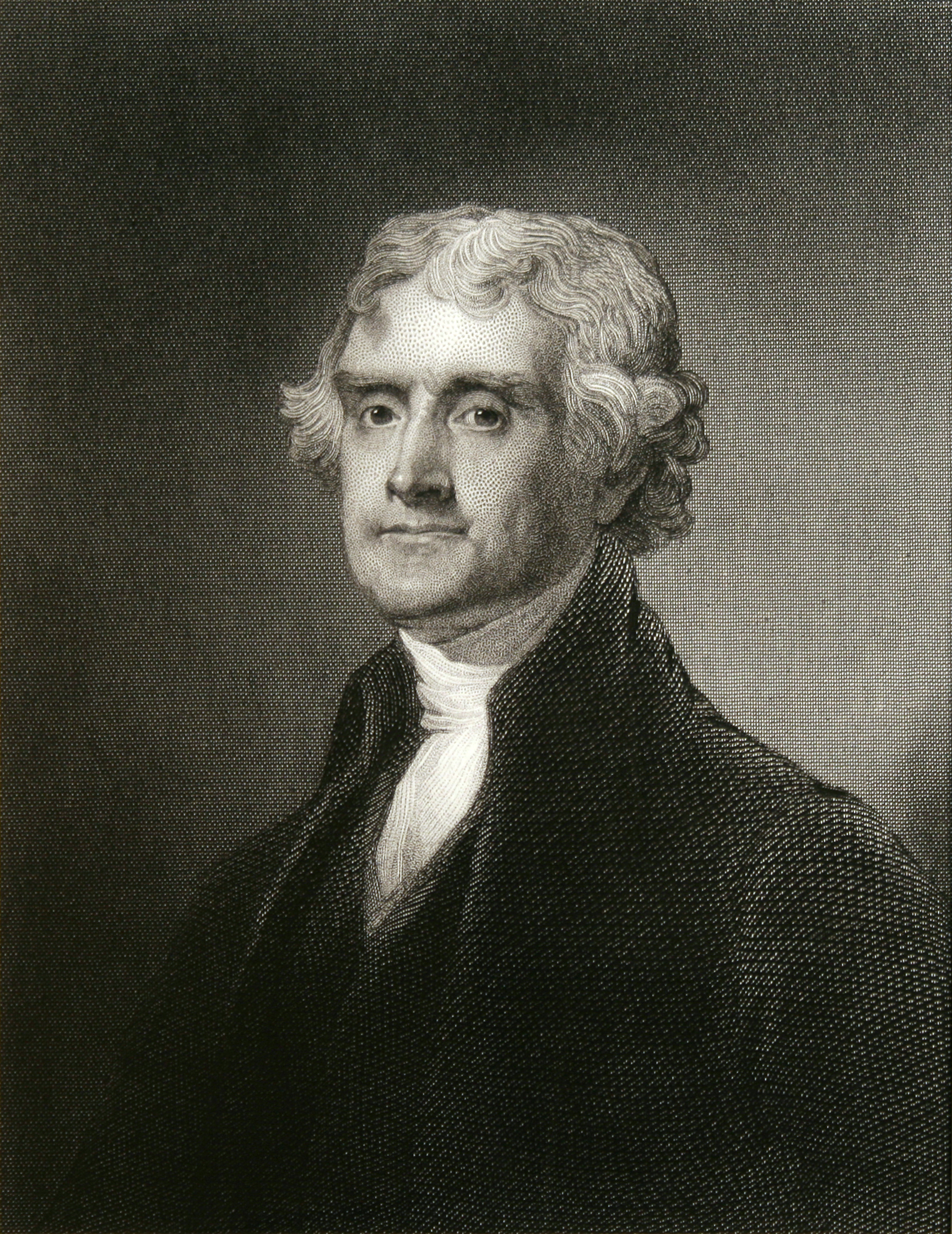
Thomas Jefferson is a prominent figure in American history, serving as Virginia governor, lawyer, architect of Monticello, and third president of the United States. His first political work to gain broad acclaim was a 1774 draft of instructions for Virginia’s delegation to the First Continental Congress. Two years later, he joined the Continental Congress and was selected to draft the Declaration of Independence. After leaving Congress in 1776, Jefferson served in the Virginia legislature and later as the state governor from 1779 to 1781. He later served as minister to France, then the first U.S. secretary of state, and eventually the third U.S. president. Among his most notable accomplishments are the Louisiana Purchase in 1803 and his support of the Lewis and Clark expedition. In the final seventeen years of his life, Jefferson retired to his home called Monticello, where he continued to receive visitors.